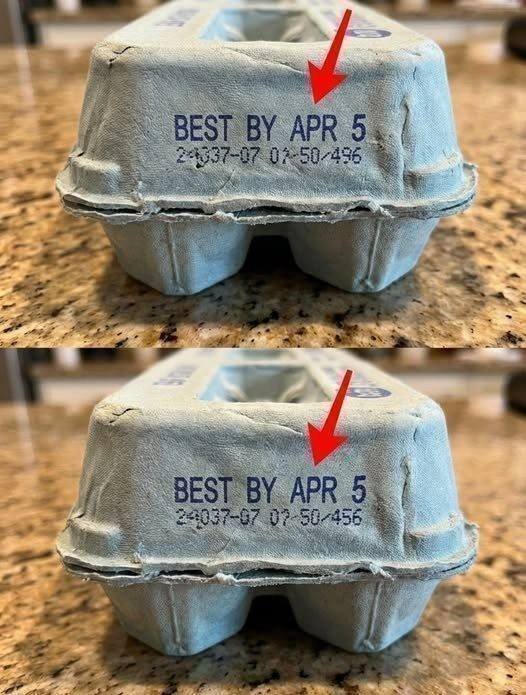
A carton of chicken eggs with a stamped expiration date refers to a standard retail egg package where the eggs are sold in a container (usually paper pulp or plastic) and labeled with a “best before,” “sell by,” or expiration date.
🥚 What the stamped date means
The date on an egg carton is usually one of these:
- “Best Before” → Eggs are best quality up to this date
- “Sell By” → Store guideline for freshness, not safety
- “Use By / Expiration” → Last recommended date for peak quality
In many places, eggs can still be safe 1–3 weeks beyond the printed date if stored properly.
❄️ How to check freshness (more reliable than the date)
You can test eggs at home:
🧪 Water test
- Fresh egg → sinks and lies flat
- Older egg → stands upright
- Bad egg → floats (discard)
🧊 Proper storage
- Keep eggs refrigerated (around 4°C or below)
- Store in original carton (protects from odor absorption)
- Avoid washing before storage (removes natural protective coating)
⚠️ Safety note
Eggs can sometimes carry Salmonella infection, so:
- Cook eggs thoroughly if you’re unsure about freshness
- Avoid raw or undercooked eggs for vulnerable groups (children, elderly, pregnant people)
🧠 Key takeaway
The stamped date on a carton is mostly about quality, not exact safety cutoff. Properly stored eggs often last beyond it, but smell, appearance, and simple tests are more reliable indicators.
