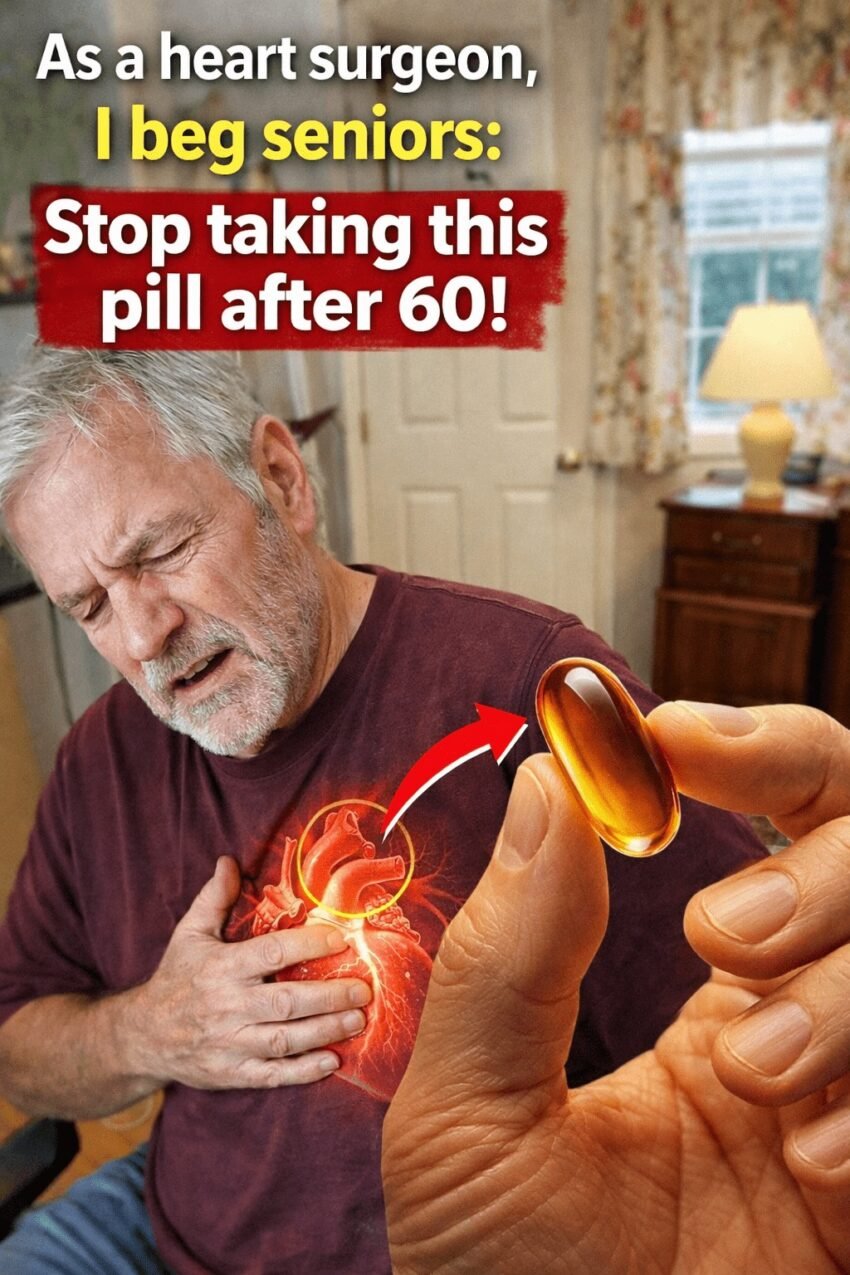
There is no credible medical evidence that a heart surgeon is urging all seniors to stop taking “a specific pill after 60” as a universal rule.
What does exist is a real but often misquoted medical message: some medications are re-evaluated in older adults, and in certain cases doctors may stop or switch them—but it is always individual, not age-based for everyone.
🧠 Where this claim usually comes from
💊 1. Aspirin (most common source of the rumor)
Doctors and major guidelines have updated advice about daily aspirin:
- It is no longer recommended for most people over 60 to prevent a first heart attack or stroke
- Because bleeding risk can outweigh benefits in older adults
But important detail:
- ✔ People who already had a heart attack or stroke often must continue it under supervision
- ❌ It is NOT a blanket rule to stop it for everyone after 60
❤️ 2. Heart medications are NOT usually stopped suddenly
After heart disease, common life-saving drugs include:
- Statins
- Beta blockers
- ACE inhibitors
- Antiplatelet drugs (like aspirin or clopidogrel)
Doctors generally emphasize:
- These medications reduce heart attack and stroke risk
- Stopping them without medical advice can be dangerous
⚠️ 3. Why “stop after 60” messages go viral
These claims spread because they:
- Mix real guideline updates (like aspirin guidance)
- Remove medical context (prevention vs treatment)
- Turn “talk to your doctor” into “stop the pill”
🚨 What doctors actually warn about
Experts do say in older adults:
- Some medications may become unnecessary
- Side effects may increase with age
- “Deprescribing” (carefully reducing meds) can be appropriate—but only under medical supervision
That is very different from a universal rule.
🧾 Bottom line
- ❌ No heart surgeon recommends that all seniors stop a specific pill after 60
- ✔ Some drugs (especially aspirin for prevention) are reassessed in older age
- ✔ Heart medications are personalized, not age-banned
- 🚨 Never stop heart medication without a doctor’s advice
If you want, tell me where you saw this claim—I can break down whether it’s:
- partially true but misinterpreted
- or completely misinformation
and what the real medical guideline actually says.
