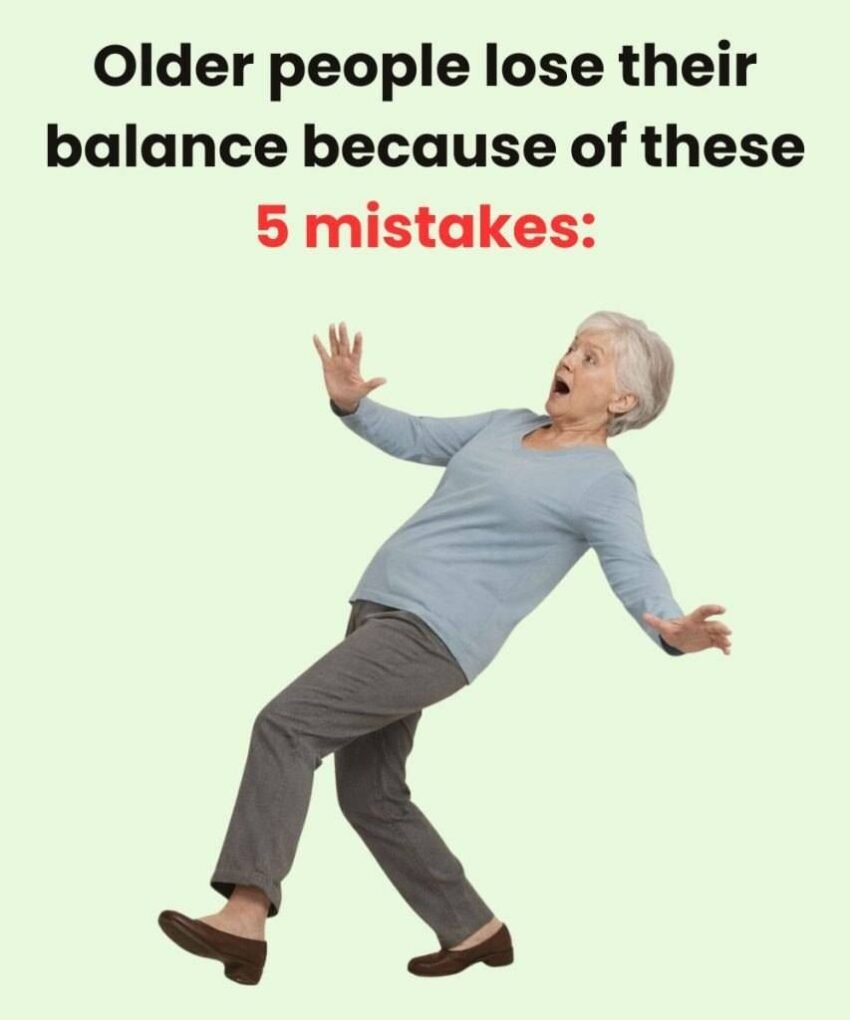
Yes—older adults can experience loss of balance, and it’s often linked to a mix of common mistakes, habits, and age-related changes. It’s not usually one single cause.
🧠 1. Not staying physically active
- Weak leg muscles reduce stability
- Poor core strength affects posture
- Less walking = poorer coordination over time
👀 2. Ignoring vision problems
- Poor eyesight affects depth perception
- Not updating glasses prescription
- Cataracts or other eye conditions
👂 3. Hearing loss (often overlooked)
- Inner ear helps control balance
- Untreated hearing loss can affect spatial awareness
💊 4. Medication mistakes
- Taking multiple drugs that cause dizziness
- Blood pressure drops when standing up too fast
- Sedatives or sleep medications increasing unsteadiness
💧 5. Dehydration or poor nutrition
- Low fluid levels can cause dizziness
- Vitamin deficiencies (like B12) affect nerves
🏠 6. Unsafe home environment
- Loose rugs or clutter
- Poor lighting in hallways or stairs
- Lack of handrails
🧍 7. Standing up too quickly
- Causes orthostatic hypotension (sudden BP drop)
- Leads to dizziness or fainting
🧠 8. Medical conditions
- Inner ear disorders
- Parkinson’s disease
- Stroke effects
- Diabetes-related nerve damage
🚨 Why balance loss matters
Falls can lead to:
- Fractures (hip, wrist)
- Head injuries
- Loss of independence
🟡 Simple summary
Older individuals may lose balance due to weak muscles, vision or hearing issues, medications, dehydration, unsafe environments, or medical conditions—often a combination of factors.
