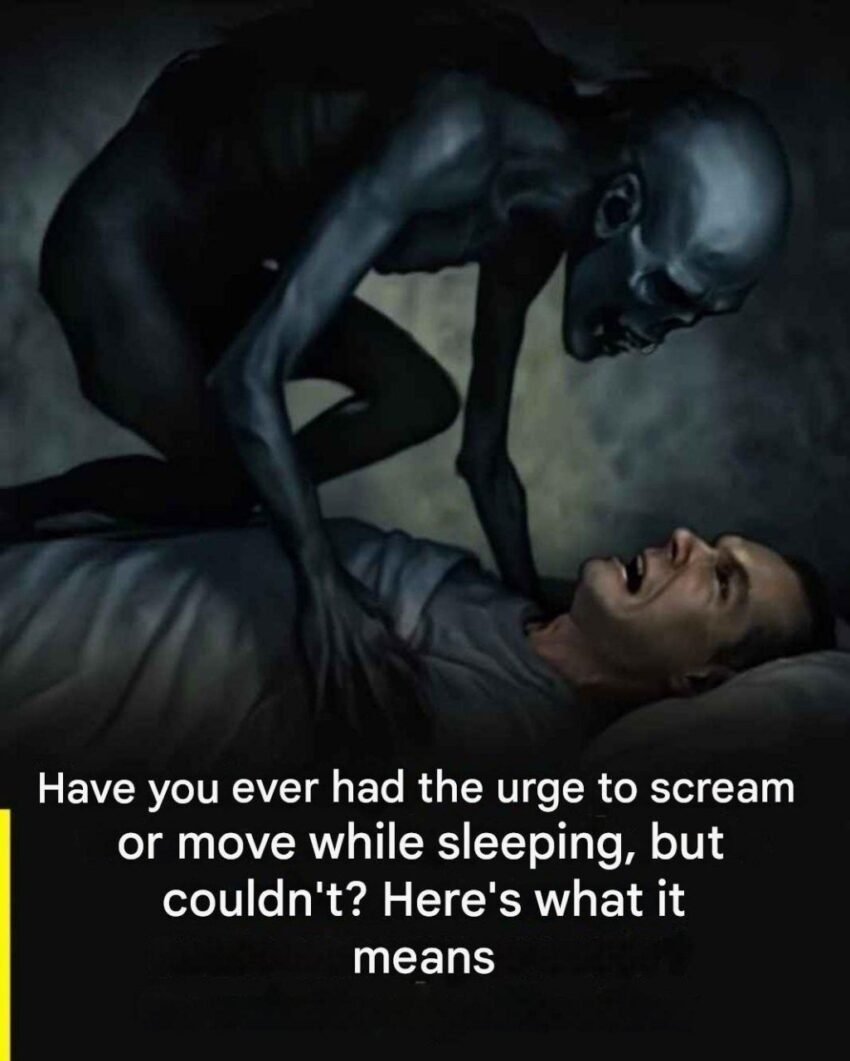
Sleep paralysis is a short-lived but often frightening condition where a person is aware but temporarily unable to move or speak while falling asleep or waking up.
😴 What it feels like
During an episode, a person may:
- Be mentally awake but unable to move the body
- Try to speak but cannot make a sound
- Feel pressure on the chest or difficulty breathing
- Sense a “presence” in the room
- Experience vivid hallucinations (visual, auditory, or tactile)
These sensations usually last a few seconds to a couple of minutes.
🧠 Why it happens
Sleep paralysis occurs when the brain and body are out of sync during sleep transitions:
- During REM sleep (dream stage), the body is naturally “paralyzed” to prevent acting out dreams
- Sometimes, a person becomes conscious before this paralysis turns off
- The result is awareness without movement
⚠️ Common triggers
Sleep paralysis is more likely with:
- 😴 Lack of sleep or irregular sleep schedule
- 😰 High stress or anxiety
- 🛏️ Sleeping on your back
- 🕒 Sleep disorders like narcolepsy
- Jet lag or disrupted sleep cycles
👻 Hallucinations (why it feels scary)
Because part of the brain is still dreaming, people may:
- See shadows or figures
- Hear footsteps or voices
- Feel a “weight” on the chest
These are dream-like hallucinations blending with reality, not real external threats.
🛡️ Is it dangerous?
- ❌ Not physically harmful
- ❌ Not a sign of mental illness in most cases
- ✔️ Can feel very distressing but is temporary
🧘 How to reduce episodes
- Maintain a regular sleep schedule
- Get enough sleep (7–9 hours)
- Reduce stress before bed
- Avoid sleeping on your back if prone to episodes
- Improve sleep hygiene (dark, quiet room)
🟡 Simple summary
Sleep paralysis is a temporary state where the brain wakes up before the body does, causing brief inability to move or speak, often with vivid and frightening sensations.
