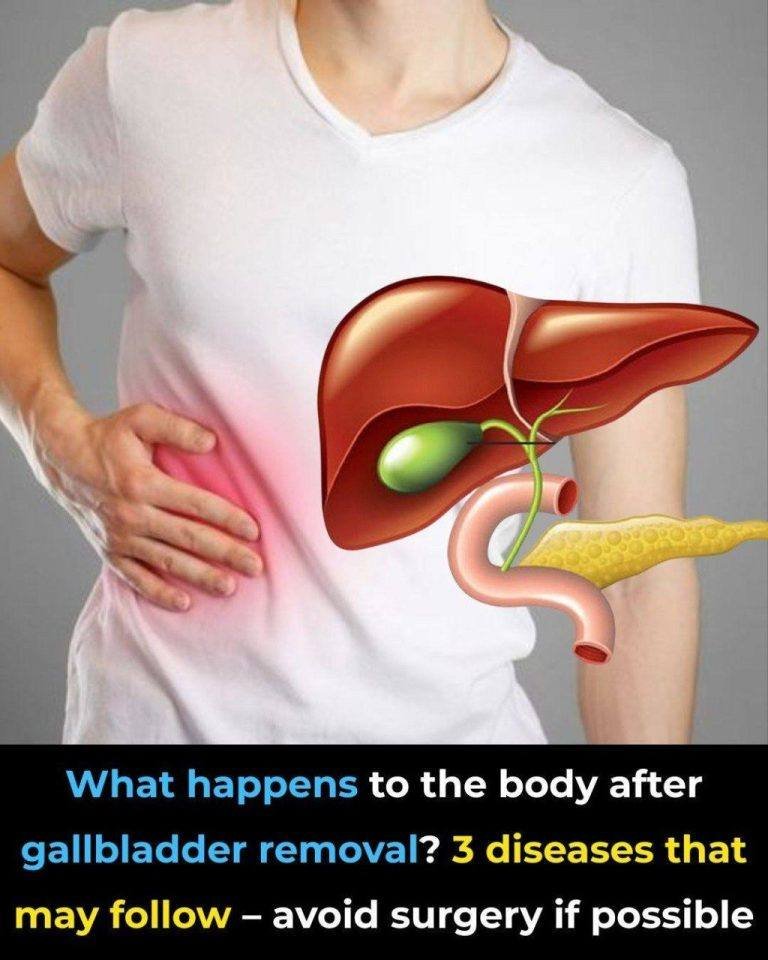
After gallbladder removal (called a cholecystectomy), most people do well long-term, but a small number can develop certain digestive-related conditions.
Here are 3 important conditions that may occur after gallbladder removal:
1. 🧪 Postcholecystectomy Syndrome
This is a group of symptoms that can continue or appear after surgery.
Symptoms:
- Abdominal pain (especially upper right or center)
- Bloating and gas
- Indigestion or nausea
- Diarrhea
Why it happens:
- Bile flows continuously into the intestine instead of being stored
- Sometimes due to leftover stones or bile duct issues
2. 💩 Bile Acid Diarrhea
After the gallbladder is removed, bile may flow too freely into the intestines.
Symptoms:
- Frequent loose stools
- Urgency after meals
- Watery diarrhea (especially after fatty foods)
Why it happens:
- Excess bile irritates the colon
- Poor fat digestion regulation
3. 🪨 Bile Duct Stones (Choledocholithiasis)
Even after gallbladder removal, stones can still form or remain in bile ducts.
Symptoms:
- Severe upper abdominal pain
- Jaundice (yellowing of skin/eyes)
- Fever or chills (if infection develops)
Why it happens:
- Stones left behind or newly formed in the bile ducts
🧠 Important note
Most people:
- Do not develop serious diseases
- Adjust digestion within weeks to months
- Live completely normal lives after surgery
🍽️ Helpful lifestyle tips after gallbladder removal
- Eat smaller, low-fat meals
- Avoid very oily/fried foods early after surgery
- Increase fiber gradually
- Stay hydrated
If you want, I can also explain:
- long-term diet after gallbladder removal
- foods that trigger symptoms
- or how bile digestion changes after surgery
