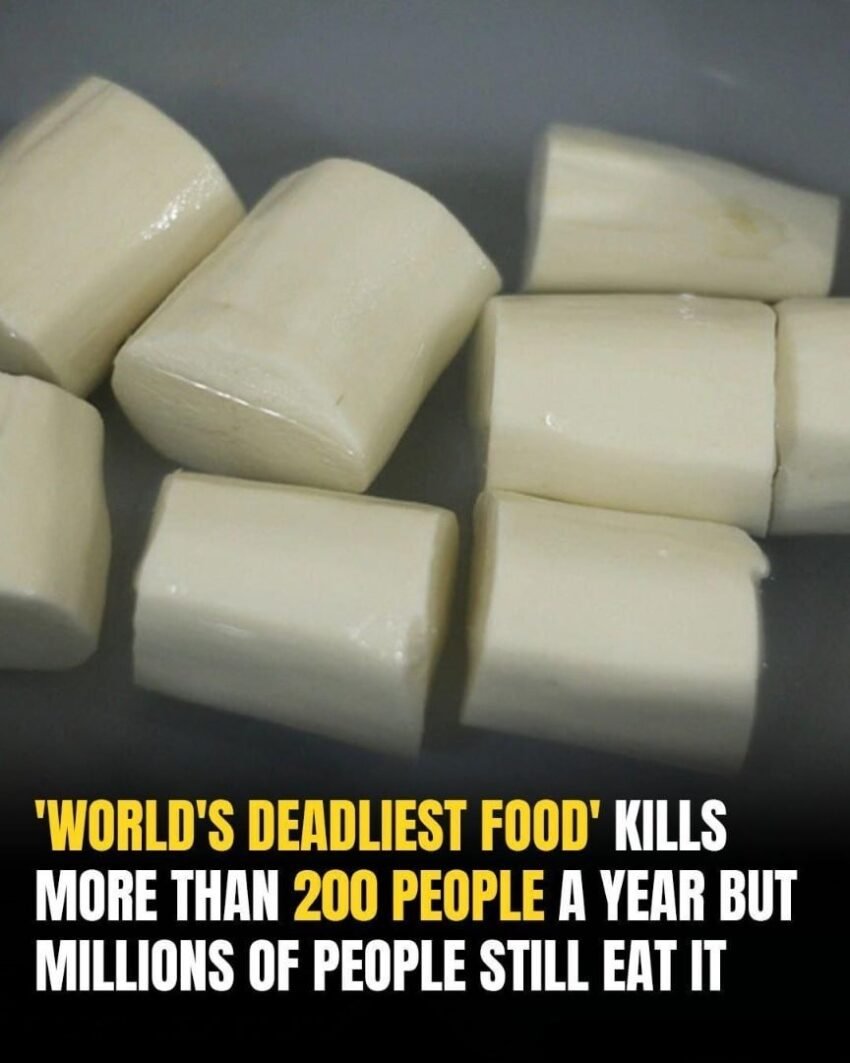
cassava root is a major staple food in many tropical countries, but it contains natural compounds that can be dangerous if it is not prepared correctly.
⚠️ Why cassava can be dangerous
Raw or improperly processed cassava contains substances called cyanogenic glycosides, which can release cyanide in the body.
If eaten without proper preparation, it can lead to cyanide poisoning, which in severe cases can be fatal.
🍽️ Safe preparation removes the risk
Cassava becomes safe when it is:
- Peeled properly (skin removed completely)
- Soaked (in some traditional methods)
- Thoroughly cooked (boiled, fried, or baked)
These steps break down the toxic compounds.
🌍 Why people still rely on it
Even with this risk, cassava is widely consumed because:
- It is drought-resistant and grows in poor soil
- It provides a large source of calories (energy)
- It can be stored and processed into flour (tapioca, garri, etc.)
🧠 Simple summary
Cassava is a very important global staple food, but it must always be peeled and fully cooked before eating to be safe.
If you want, I can explain safe traditional cassava preparation methods in Africa or South Asia, or compare it with other root crops like yam and sweet potato.
