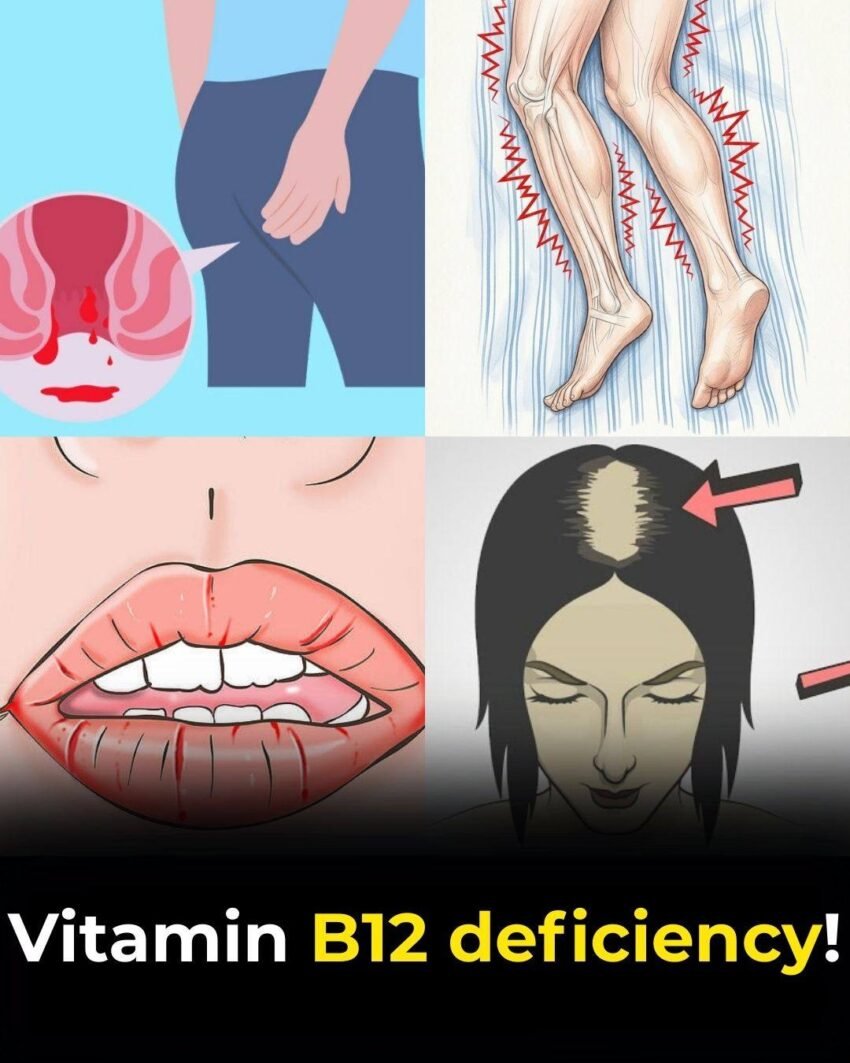
A deficiency in vitamin B12 can affect blood formation, nerve function, and brain health. The signs often develop slowly and may be subtle at first.
🧠 Neurological signs
- Tingling or “pins and needles” in hands and feet
- Numbness in limbs
- Balance problems or unsteady walking
- Memory issues or confusion
- Difficulty concentrating (“brain fog”)
🩸 Blood-related signs
- Persistent fatigue or weakness
- Pale or slightly yellow skin
- Shortness of breath (especially on exertion)
- Dizziness or lightheadedness
- Rapid heartbeat
👉 Severe cases may lead to megaloblastic anemia
👅 Mouth and digestive signs
- Sore, smooth, or swollen tongue (glossitis)
- Mouth ulcers
- Reduced appetite
- Weight loss without trying
😌 Mood and mental changes
- Irritability
- Depression or low mood
- Poor memory or mental “slowness”
⚠️ Risk groups
Higher risk of deficiency in:
- Vegetarians or vegans (low dietary intake)
- Older adults (reduced absorption)
- People with stomach/intestinal issues
- Those with pernicious anemia
🧠 Simple summary
Vitamin B12 deficiency often shows up as a combination of fatigue, nerve problems, and cognitive changes, and can worsen over time if untreated.
🚨 Important note
Because nerve damage can become permanent, it’s important to get a blood test if symptoms are suspected.
