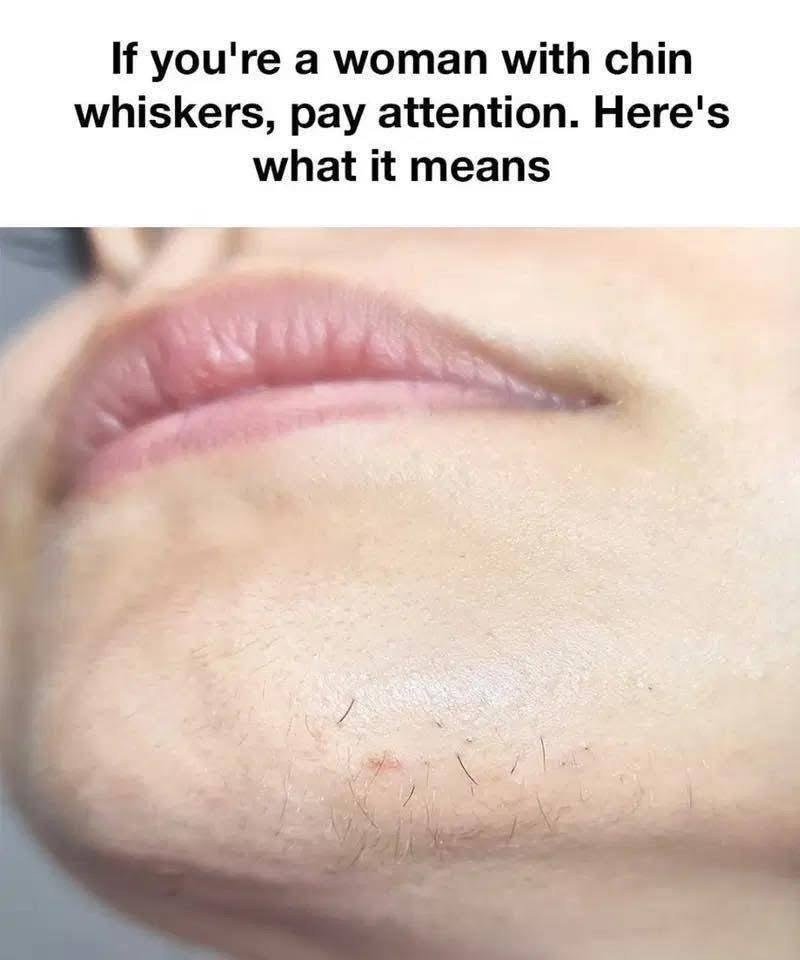
“Chin whiskers” is a casual way people describe excess coarse hair growth on the chin, but medically it usually refers to:Hirsutism
🧠 What it means
Hirsutism is when women develop dark, thick hair in areas typically more common in men, such as:
- Chin and jawline
- Upper lip
- Chest
- Lower abdomen
⚖️ Why it happens
The main cause is higher sensitivity or levels of androgens (male-type hormones).
Common reasons include:
🟠 1. Hormonal imbalance (most common)
Polycystic ovary syndrome (PCOS)
- Irregular periods
- Acne
- Weight changes
- Excess facial/body hair
🟡 2. Genetics
- Some women naturally have more facial hair
- No underlying disease
🔵 3. Medications or hormonal changes
- Certain steroids or hormone treatments
- Changes during menopause
🔴 4. Rare medical conditions
- Adrenal or ovarian disorders (less common)
🪒 How it is managed
💊 Medical treatments
- Hormonal birth control (balances androgens)
- Anti-androgen medicines (e.g., spironolactone)
- Topical hair reduction creams (for facial hair)
✂️ Cosmetic methods
- Threading, waxing, shaving
- Laser hair removal (long-term reduction)
- Electrolysis (permanent removal)
⚠️ When to see a doctor
Get checked if chin hair:
- Appears suddenly or rapidly increases
- Comes with irregular periods
- Is accompanied by acne or hair thinning on scalp
🧠 Simple takeaway
“Chin whiskers” in women are usually a form of hirsutism, most often linked to hormonal imbalance (especially PCOS), but sometimes genetic and harmless.
