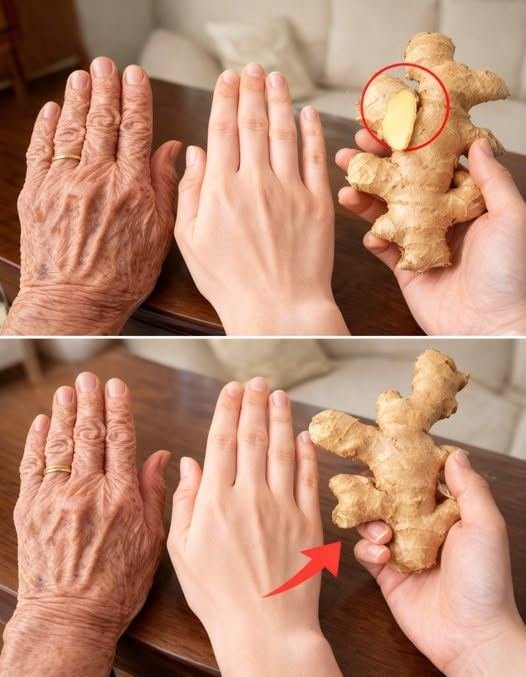
That claim is overstated and not supported by good medical evidence.
🫚 Ginger and skin
Ginger is rich in compounds like gingerols and antioxidants, which may have general anti-inflammatory properties when eaten. But that is very different from proving it can reverse or significantly reduce wrinkles when applied to skin.
🧴 Can ginger reduce wrinkles?
❌ What is NOT proven
- It does not act like an anti-aging treatment
- It does not stimulate collagen enough to mimic cosmetic procedures
- It does not reliably reduce wrinkles in clinical studies
⚠️ What may actually happen on skin
When applied directly, ginger can:
- Irritate sensitive skin
- Cause redness or burning
- Trigger allergic reactions in some people
- Be too harsh for facial use (especially undiluted)
🧠 Why the myth exists
This idea likely comes from:
- Ginger’s antioxidant reputation in food
- General “natural equals anti-aging” marketing
- Temporary skin tightening from irritation (not real wrinkle reduction)
💉 What actually reduces wrinkles (evidence-based)
Medical or cosmetic methods include:
- Sunscreen (prevents new wrinkles)
- Retinoids (vitamin A derivatives)
- Moisturizers with hyaluronic acid
- Laser treatments or microneedling
- Botox or fillers (for deeper wrinkles)
🧠 Simple takeaway
Ginger is a healthy food ingredient, but applying it to skin is not a proven anti-aging treatment and may irritate the skin instead of improving wrinkles.
If you want, I can explain safe natural skincare options that actually have evidence for anti-aging or how wrinkles form in simple terms.
