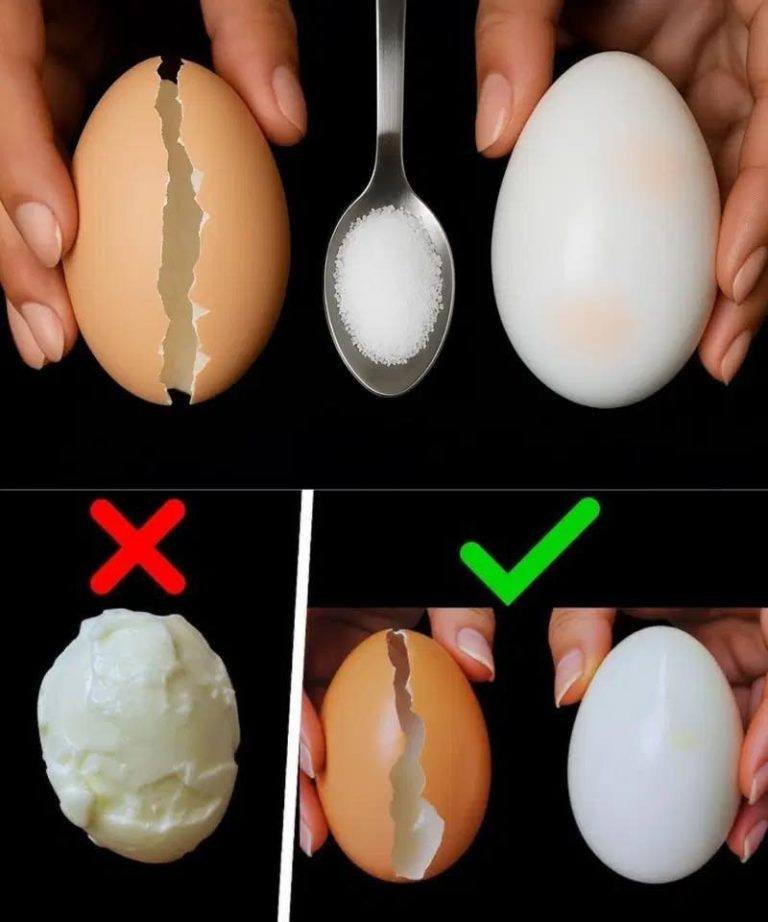
That statement is a common kitchen myth (partly misinterpreted).
🥚 What actually happens when eggs crack in boiling water
Boiled egg shells may crack because of:
- Sudden temperature change (cold egg → hot water)
- Air expanding inside the egg
- Rough handling
🧂 Does salt help “seal” cracks?
❌ Not really
- Salt does not chemically seal the shell
- It does not repair cracks
✔️ What it can do
- Slightly speeds up egg white coagulation
- May reduce leakage a little if a crack is small
- Makes the water denser, which can sometimes help proteins set faster
🍶 Does vinegar help?
❌ Not a true seal either
Vinegar does not glue the shell back together.
✔️ What it actually does
- The acid makes egg white proteins solidify faster
- This can help “plug” small leaks after cracking
- It reduces how much egg white escapes, but doesn’t fix the shell
🧠 The real effect
If an egg cracks:
- Salt/vinegar may help reduce mess, not repair the shell
- The egg white may still leak slightly
- It’s more about coagulation control, not sealing
💡 Better ways to prevent cracks
- Bring eggs to room temperature before boiling
- Start eggs in cold water and heat gradually
- Avoid dropping eggs into boiling water
- Add a pinch of salt for easier peeling later, not crack prevention
🧠 Simple takeaway
Salt or vinegar in boiling water does not seal cracked eggshells, but vinegar can help egg white set faster and reduce leakage slightly. The best solution is prevention, not fixing after cracking.
If you want, I can also explain:
- why eggs are hard to peel sometimes
- or the perfect method for soft, medium, and hard-boiled eggs without cracking 🥚
