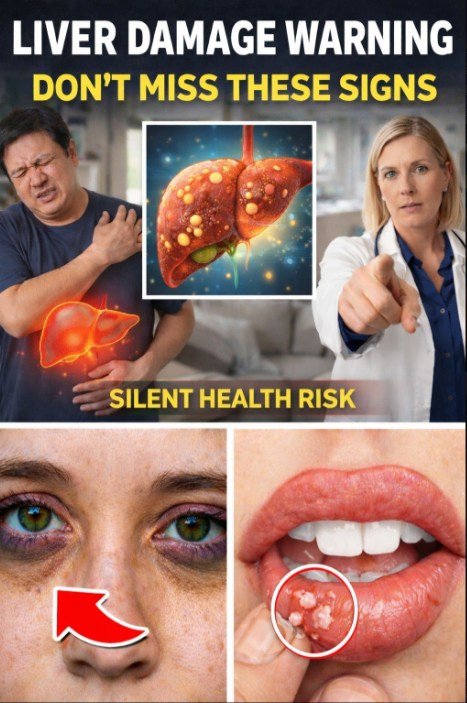
Symptoms of liver damage can be subtle at first, but they may become more noticeable as the condition progresses. The liver is resilient, so signs often appear late, which is why medical evaluation is important if symptoms persist.
🧠 Early or general symptoms
These can be mild and easily overlooked:
- Fatigue or unusual tiredness
- Loss of appetite
- Nausea or occasional vomiting
- Mild discomfort or dull pain in the upper right abdomen
- Unexplained weakness
⚠️ More concerning symptoms
As liver function worsens, symptoms may include:
🟡 Jaundice
- Yellowing of the skin and eyes
This is one of the most recognizable signs of liver problems.
🌑 Dark urine / pale stool
- Urine becomes dark brown or tea-colored
- Stools may become pale, clay-colored
🤕 Abdominal swelling or pain
- Swelling in the abdomen (fluid buildup)
- Tenderness or heaviness in the upper right side
🦵 Swelling in legs or ankles
- Fluid retention due to poor liver function
🧠 Confusion or brain changes
- Difficulty concentrating
- Confusion or personality changes
This can be linked to a serious condition called hepatic encephalopathy
🩸 Easy bruising or bleeding
- Nosebleeds or gum bleeding
- Bruising easily due to reduced clotting factors
🚨 Serious warning signs (seek urgent care)
- Severe jaundice
- Vomiting blood or black stools
- Severe confusion or drowsiness
- Rapid abdominal swelling
- High fever with liver symptoms
🧾 Common causes of liver damage
- Excess alcohol use
- Viral infections (like hepatitis)
- Fatty liver disease
- Certain medications or toxins
- Autoimmune conditions
🧠 Bottom line
Liver damage often starts quietly, but symptoms like jaundice, swelling, confusion, and dark urine are important warning signs that need medical attention.
If you want, I can also explain early fatty liver signs, reversible liver damage, or how liver function tests work.
