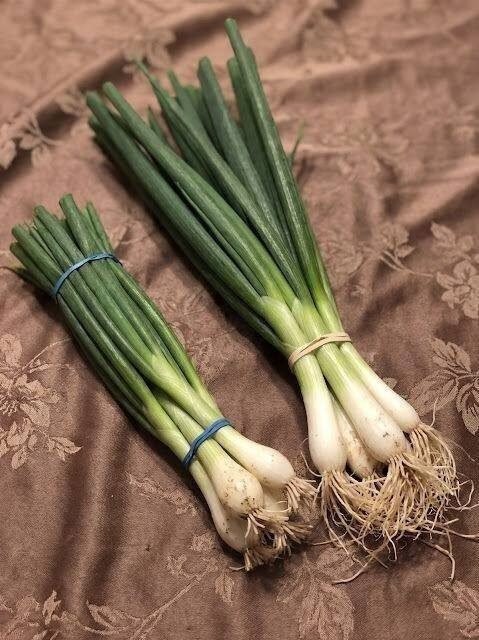
Ah yes — green onions, scallions, and spring onions are often confused because they look similar, but there are subtle differences in flavor, size, and usage. 🌿
Here’s a clear breakdown:
🧅 Green Onions vs Scallions vs Spring Onions
| Feature | Green Onions | Scallions | Spring Onions |
|---|---|---|---|
| Botanical name | Allium fistulosum or Allium cepa | Usually same as green onions | Allium cepa (immature bulb) |
| Appearance | Long, thin, small white base with green stalk | Very similar to green onions | Slightly larger white bulb at base, green tops |
| Flavor | Mild, slightly peppery | Mild, delicate | Slightly stronger onion flavor, more “bulby” |
| Usage | Garnishes, salads, stir-fries | Same as green onions | Roasting, grilling, caramelizing, sautéing |
| Harvest stage | Early stage | Early stage | Slightly older, bulb more developed |
🔹 Quick Tips for Cooking
- Green onions / Scallions: Best raw or lightly cooked. Great for topping soups, tacos, or stir-fries.
- Spring onions: Better for roasting, grilling, or cooking where you want a stronger onion flavor.
Fun fact: In many recipes, “green onion” and “scallion” are used interchangeably, but spring onions are technically a bit more mature.
If you want, I can also make a mini visual guide showing exactly how to tell them apart in the store — that helps avoid mix-ups while shopping.
Do you want me to do that?
