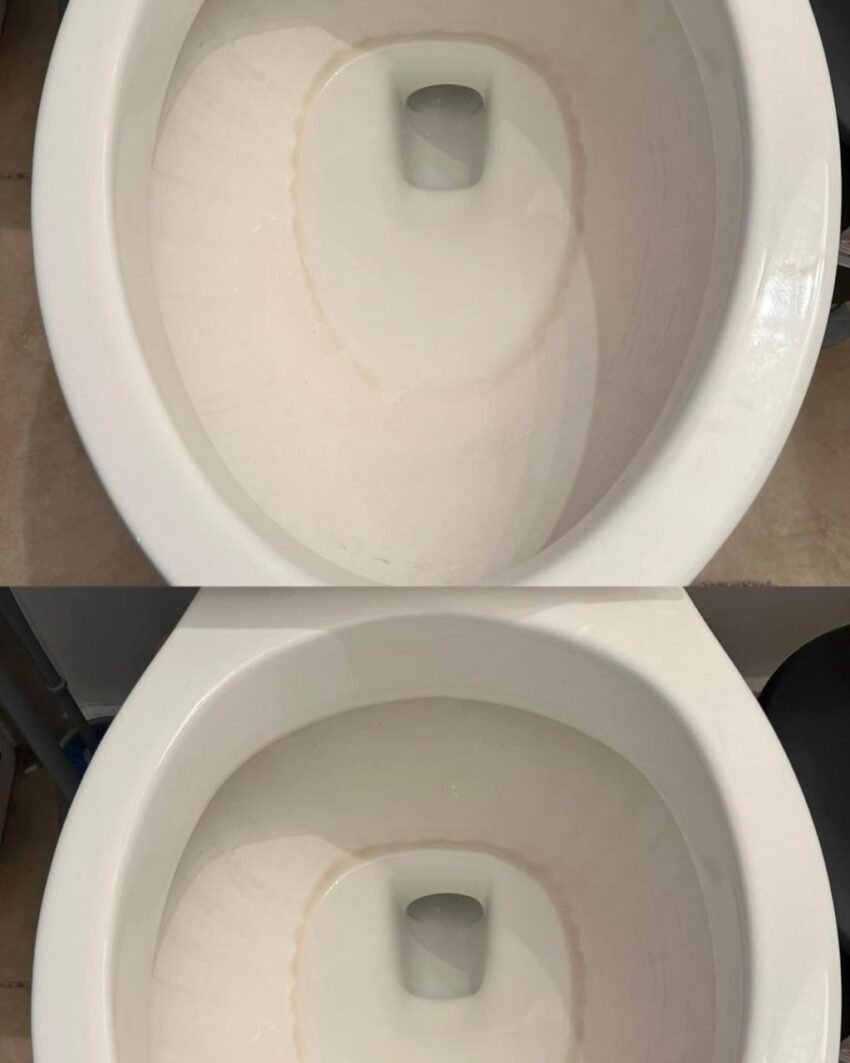
Those stubborn “water rings” in a toilet are almost always mineral deposits (limescale) or iron stains, and regular cleaners often don’t touch them — which is why scrubbing alone hasn’t worked. The good news: you can remove them with the right approach.
🧼 What actually works (step-by-step)
Method 1: Vinegar soak (best starting point)
- Turn off the water supply and flush to lower the water level.
- Pour white vinegar into the bowl until the ring is fully covered.
- Let it sit for at least 2–4 hours (overnight is even better).
- Scrub with a toilet brush.
👉 Vinegar breaks down limescale naturally.
Method 2: Baking soda + vinegar boost
- Sprinkle baking soda over the stained ring.
- Pour vinegar over it (it will fizz).
- Let sit 30–60 minutes.
- Scrub again.
👉 This helps loosen thicker buildup.
Method 3: Pumice stone (for tough rings)
- Use a pumice stone made for toilets.
- Wet both the stone and the bowl first.
- Gently rub the stain — it will physically remove mineral buildup without scratching porcelain (if used correctly).
⚠️ Don’t use this on dry surfaces or plastic toilets.
Method 4: Acid-based cleaner (most powerful)
- Look for a cleaner with hydrochloric acid or similar descaling agents.
- Apply carefully, let sit per instructions, then scrub.
⚠️ Wear gloves and ensure ventilation — these are strong chemicals.
💡 Why it keeps happening
- Hard water (high minerals) leaves deposits behind.
- Iron in water causes orange/rust rings.
- Letting water sit unused for long periods makes it worse.
✅ How to prevent it
- Clean the bowl once a week before buildup forms.
- Use a toilet cleaner tablet (helps reduce minerals).
- If your water is very hard, consider a water softener long-term.
If you tell me the color of the ring (orange, brown, white, black), I can pinpoint exactly what type of stain it is and give you the fastest method to remove it completely.
