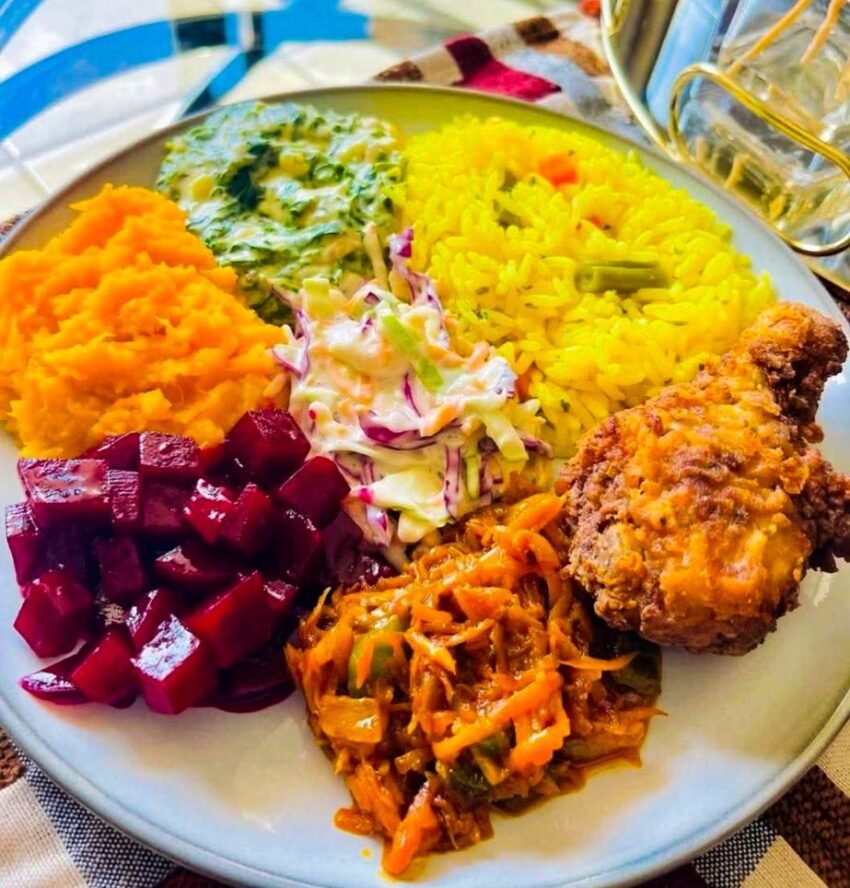
The South African “7 Colours” Sunday meal is a vibrant, comforting tradition—especially in Black South African households—where a plate is filled with a variety of colorful dishes. The idea isn’t strictly about exactly seven items, but about abundance, variety, and visual appeal.
What “7 Colours” means
The name reflects:
- A mix of different colors on one plate
- A balance of flavors and textures
- A sense of family gathering and celebration, often on Sundays after church
Typical components
While it varies by home, a classic spread might include:
- Starch base
- Rice or pap (maize porridge)
- Meat dish
- Roast chicken, beef stew, or braai (grilled meat)
- Gravy or sauce
- Rich brown gravy or tomato-based sauce
- Vegetables (the “colours”)
- Beetroot salad (deep purple/red, often sweet-tangy)
- Carrots (sometimes glazed or curried)
- Green beans or cabbage
- Butternut squash or pumpkin
- Sweet corn
- Salads & extras
- Coleslaw or potato salad
- Sambals (fresh tomato-onion relish)
- Occasionally pasta salad
Flavor profile
- A mix of savory, sweet, and tangy
- Hearty and home-style rather than spicy-hot
- Comfort food with layered tastes in one plate
Cultural significance
This meal is less about strict recipes and more about:
- Family and togetherness
- Generosity and hospitality
- Showcasing home cooking skills and creativity
It’s similar in spirit to a Sunday roast in other cultures—but more colorful and diverse on a single plate.
Simple example plate
You might see:
- Rice
- Roast chicken with gravy
- Beetroot salad
- Butternut squash
- Green beans
- Carrots
- Coleslaw
If you want, I can give you a full “7 Colours” menu with recipes so you can recreate the whole spread at home.
