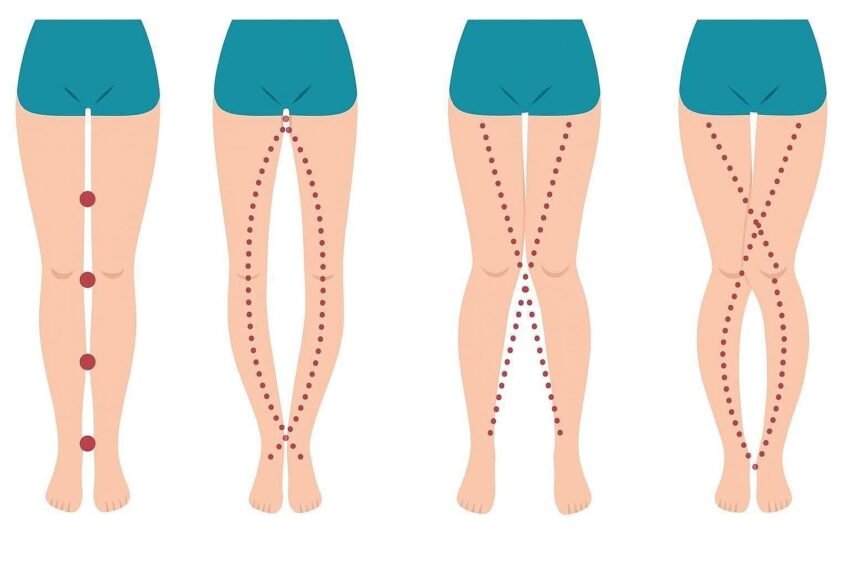
Lower leg alignment refers to how your knees, tibia (shin), and ankles line up when you stand or walk. There are a few common patterns:
🦵 1. Neutral alignment (normal)
- Knees and ankles line up straight
- Weight is evenly distributed
- Considered the most efficient for movement
🦵 2. Genu varum (bow legs)
- Knees stay apart while ankles are together
- Legs curve outward
- Common in young children; in adults it can come from bone structure or conditions like Osteoarthritis
🦵 3. Genu valgum (knock knees)
- Knees touch or come close together while ankles stay apart
- Legs angle inward
- Can be due to genetics, growth patterns, or muscle imbalance
🦵 4. Genu recurvatum (hyperextended knees)
- Knees bend slightly backward when standing
- Can stress ligaments over time
🦵 5. Tibial torsion (twisting of the shin bone)
- Internal tibial torsion → feet point inward
- External tibial torsion → feet point outward
🦵 6. Foot-related alignment issues
These affect the lower leg as well:
- Overpronation → arches collapse inward
- Supination → weight shifts to outer foot
⚠️ When it matters
Mild variations are common and often harmless. But you may need attention if there is:
- Pain in knees, hips, or ankles
- Uneven wear on shoes
- Difficulty walking or running
🏃 What helps
- Strengthening (glutes, quads, calves)
- Stretching tight muscles
- Proper footwear or orthotics
- Physiotherapy in more severe cases
