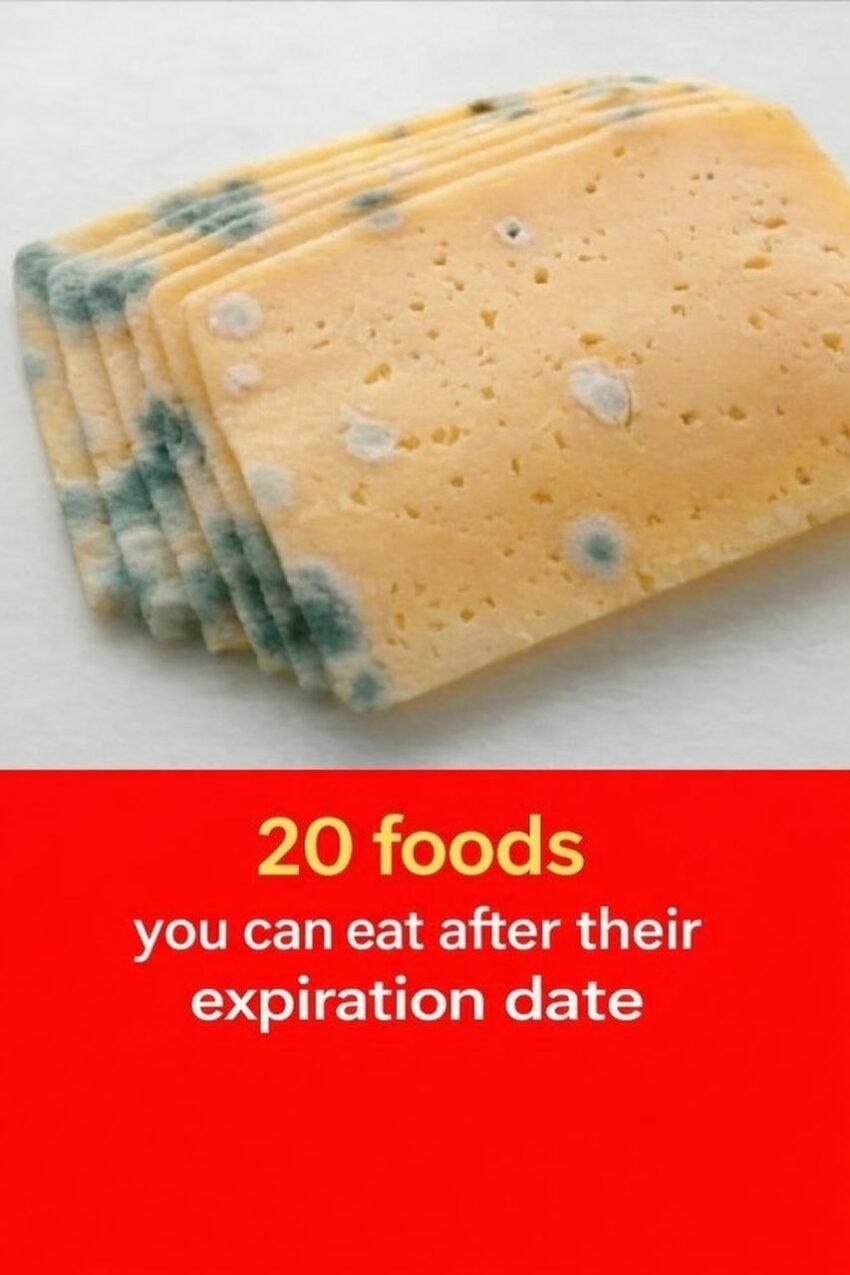
First, a reality check: “expiration date” labels aren’t all the same.
- “Best before” = quality may decline, but food is often still safe
- “Use by” = safety-related (especially for dairy/meat) and should be taken more seriously
That said, many foods can still be eaten safely after the date if they’ve been stored properly and show no spoilage.
🥫 20 foods that are often safe after the “best before” date
🧂 Pantry staples
- Rice (white) – years past if kept dry
- Pasta (dry) – usually safe long after date
- Oats – may lose freshness but still usable
- Flour – safe if no bugs or moisture
- Sugar – doesn’t really expire if dry
- Salt – essentially never expires
- Honey – can crystallize but stays safe indefinitely
- Vinegar – stable for years
🥫 Canned goods
- Canned beans
- Canned tomatoes
- Canned vegetables
- Canned fish (like tuna)
👉 Often safe years after date if can is not swollen, rusty, or leaking
🧃 Shelf-stable items
- Peanut butter – oil separation is normal
- Chocolate – may develop white “bloom,” still safe
- Crackers – may go stale but usually safe
- Coffee (ground or beans) – loses flavor, not safety
🧀 Refrigerated foods (short grace period only)
- Hard cheese (cheddar, parmesan) – can be trimmed if mold appears
- Butter – often safe slightly past date if refrigerated
- Yogurt – sometimes safe 1–2 weeks past if unopened and normal smell
- Eggs (if stored properly) – can be tested in water (fresh sinks, old floats)
⚠️ Important safety rules
Do NOT rely on dates alone—always check:
- Smell (sour, rotten = discard)
- Texture (slimy = unsafe)
- Mold (especially soft foods)
- Packaging damage (bulging cans = dangerous)
🚫 Foods you should NOT risk after expiry
- Fresh meat or poultry
- Fish (fresh)
- Soft cheeses (cream cheese, fresh mozzarella)
- Ready-to-eat deli foods
- Fresh juices (unpasteurized)
🧭 Bottom line
Many dry, canned, and high-sugar foods last far beyond their printed date, but fresh and high-moisture foods do not.
If you want, I can also give you a “how long food actually lasts after expiry” chart or a food safety rule of thumb guide.
