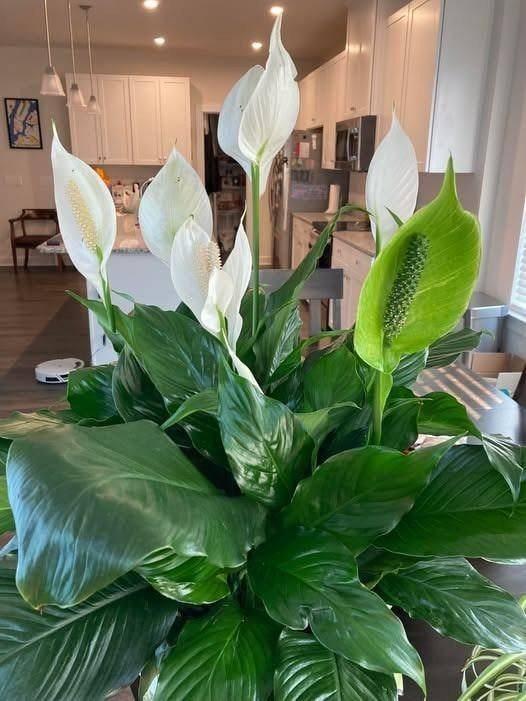
Peace Lily is a popular indoor plant known for its glossy green leaves and white “flower” spikes. Its real botanical name is Spathiphyllum, and it’s valued for both decoration and air-purifying qualities.
🌿 What makes it popular
- Grows well in low to medium light
- Produces white hood-like blooms
- Helps improve indoor air quality (commonly cited in houseplant studies)
- Relatively easy to care for
💧 Basic care guide
Light
- Prefers indirect light
- Can survive in low light, but may stop flowering
- Avoid direct sunlight (it burns the leaves)
Water
- Likes consistently moist soil, but not soggy
- Water when the top inch of soil feels dry
- Drooping leaves usually mean it needs water
Temperature
- Ideal: warm indoor temperatures
- Avoid cold drafts or very dry heat
Soil
- Well-draining potting mix
- Pot must have drainage holes
⚠️ Common problems
- Yellow leaves → overwatering or poor drainage
- Brown tips → low humidity or irregular watering
- No flowers → low light or nutrient deficiency
☠️ Important safety note
Peace lilies are toxic if eaten by pets or humans (especially cats and dogs), causing mouth irritation and stomach upset.
🌱 Simple takeaway
It’s a low-maintenance indoor plant that thrives with moderate care, indirect light, and regular watering—but dislikes extremes (too dry or too wet).
If you want, I can tell you how to revive a drooping peace lily or how to make it bloom more often.
