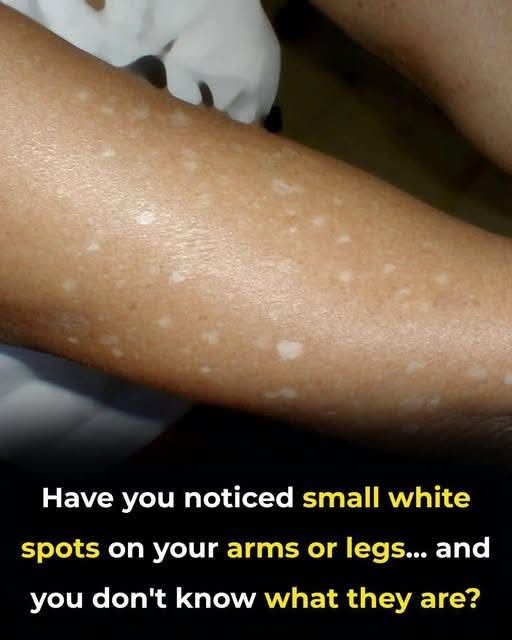
Idiopathic guttate hypomelanosis (IGH) is a common, harmless skin condition that causes small white spots on sun-exposed areas of the body.
🧴 What it looks like
- Tiny white or pale spots (2–5 mm)
- Usually flat, not itchy or painful
- Most often on:
- Arms
- Legs
- Face
- More noticeable in older adults
🧠 Why it happens
The exact cause isn’t fully known (“idiopathic” means unknown), but science suggests:
- ☀️ Long-term sun exposure (UV damage)
- 🧬 Aging of skin cells
- 🎨 Reduced melanin production in small skin areas
It is not contagious and not an infection.
👥 Who gets it?
- More common after age 40–50
- Very common in older adults
- People with lighter or sun-exposed skin show it more clearly
⚠️ Is it dangerous?
- ❌ Not dangerous
- ❌ Not cancerous
- ❌ Not infectious
- ✔ Only a cosmetic skin change
💊 Treatment options (cosmetic only)
There is no mandatory treatment, but options include:
🌞 1. Sun protection (most important)
- Sunscreen (SPF 30+)
- Long sleeves / protective clothing
Prevents new spots from forming.
🧴 2. Topical treatments
- Retinoid creams (may improve skin texture slightly)
- Lightening creams (limited effectiveness)
💡 3. Dermatology procedures
- Cryotherapy (freezing spots)
- Laser therapy
- Microdermabrasion
Results vary and are mainly cosmetic.
🧾 Bottom line
Idiopathic guttate hypomelanosis is a harmless, age- and sun-related skin condition that causes small white spots. It does not affect health and usually requires no treatment.
