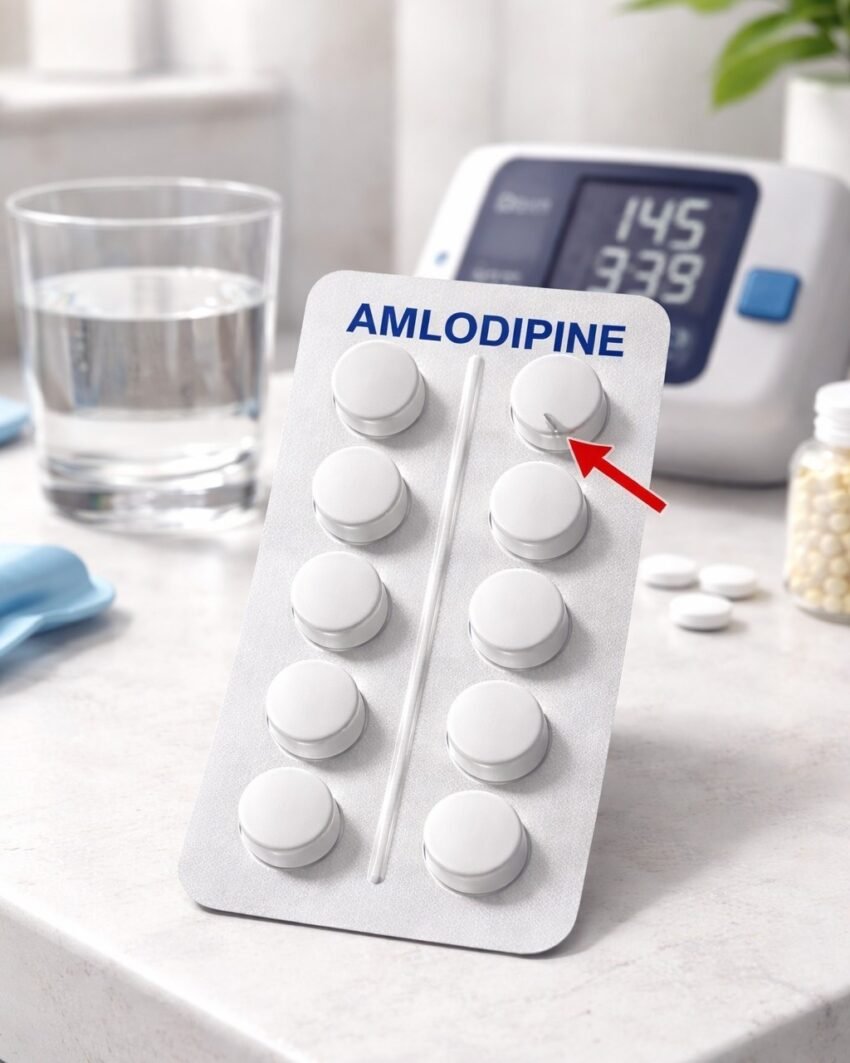
Amlodipine is a prescription medication used mainly to treat high blood pressure and chest pain (angina). It belongs to a class of drugs called calcium channel blockers.
🫀 How it works
Amlodipine relaxes and widens blood vessels, which:
- Lowers blood pressure
- Improves blood flow to the heart
- Reduces the heart’s workload
🧾 Common uses
- High blood pressure (hypertension)
- Angina (chest pain due to reduced heart blood flow)
- Sometimes used for coronary artery disease
💊 Common side effects
- Swelling in ankles or feet (very common)
- Flushing or warmth
- Headache
- Dizziness
- Fatigue
⚠️ Less common but important effects
- Fast or irregular heartbeat
- Gum swelling (gingival overgrowth)
- Low blood pressure (especially when standing up quickly)
🚨 When to seek medical help
- Severe swelling or sudden weight gain
- Chest pain that worsens
- Fainting or severe dizziness
- Shortness of breath
🧠 Important safety notes
- Take it at the same time daily
- Don’t stop suddenly without medical advice
- Works gradually—it may take a few days to weeks to show full effect
- Avoid grapefruit juice in large amounts unless your doctor says it’s okay
🧩 Bottom line
Amlodipine is widely used and effective for blood pressure control, but it works best when combined with lifestyle changes like diet, exercise, and salt reduction.
If you want, I can explain:
- how amlodipine compares to other blood pressure medicines
- or ways to reduce its side effects (like swelling) 👍
