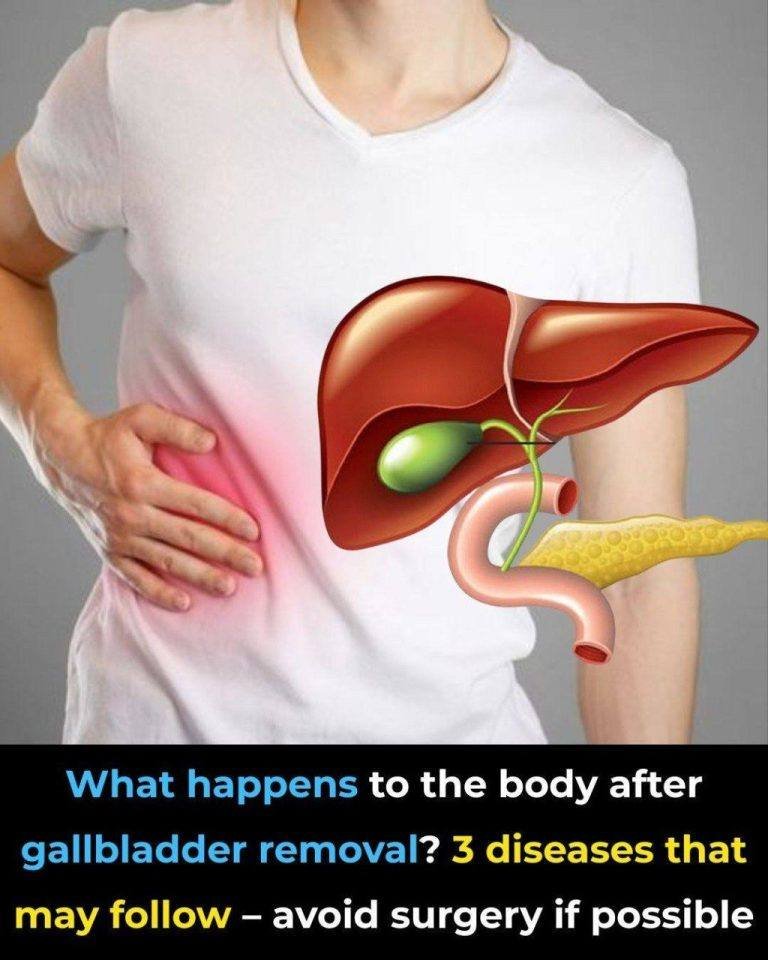
Gallbladder removal is a common surgery where the gallbladder is taken out because it’s causing pain, infection, or stones.
🩺 What it is
The gallbladder is a small organ under the liver that stores bile (a fluid that helps digest fat).
Removal is called a cholecystectomy.
🏥 Why it’s done
Doctors usually recommend it for:
- Gallstones causing pain or blockage
- Gallbladder infection (cholecystitis)
- Repeated inflammation or complications
🔧 Types of surgery
1. Laparoscopic (most common)
- Small cuts
- Camera + instruments used
- Faster recovery (usually 1–2 weeks)
2. Open surgery (less common)
- Larger cut in abdomen
- Used in complicated cases
- Longer recovery (4–6 weeks or more)
🍽️ Life after removal
You can live normally without a gallbladder, but:
- Bile flows directly into the intestine instead of being stored
- Fat digestion may feel different at first
Possible changes:
- Loose stools after fatty meals
- Bloating or discomfort
- Need for smaller, low-fat meals initially
Most people adjust within weeks to months.
⚠️ After surgery care
- Eat low-fat meals at first
- Avoid fried or greasy foods initially
- Gradually return to normal diet
- Stay hydrated
- Follow doctor’s activity advice
🧠 Key point
The gallbladder is not essential for survival, so removal is generally safe and common.
🚩 When to seek help after surgery
- Severe abdominal pain
- Fever
- Yellowing of skin/eyes (jaundice)
- Persistent vomiting
