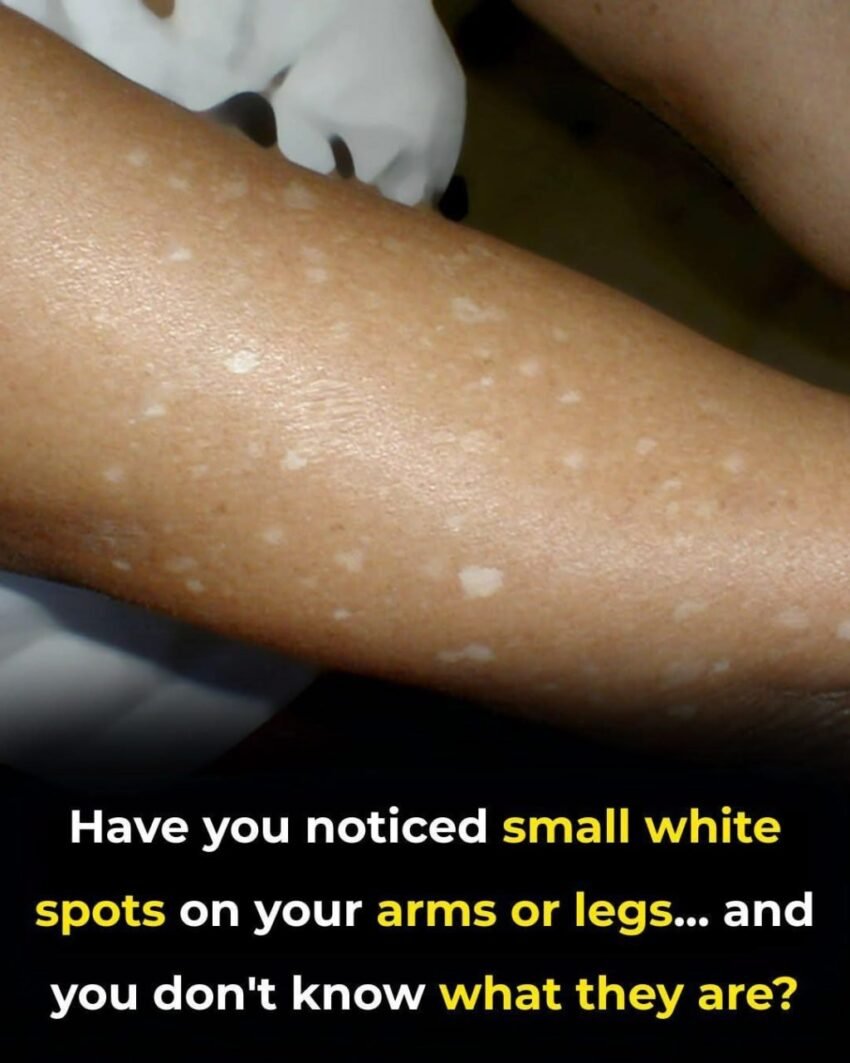
Idiopathic guttate hypomelanosis (IGH) is a common, harmless skin condition that causes small, white “confetti-like” spots, usually on sun-exposed areas.
What it looks like
- Tiny (2–5 mm) white or pale spots
- Most often on forearms, shins, face, and shoulders
- Spots are flat, not itchy or painful
- More noticeable in people with tanned or darker skin
Why it happens
Despite the name “idiopathic” (meaning unknown cause), it’s strongly linked to:
- Chronic sun exposure (UV damage)
- Aging of the skin
- Gradual reduction in melanin production in small skin areas
It is not infectious, not dangerous, and not related to vitiligo, though it can look similar at first glance.
Is it serious?
No. It is purely cosmetic and does not affect overall health.
Treatment options (if desired)
There is no mandatory treatment, but some people seek cosmetic improvement:
- Sun protection (most important): prevents new spots
- Topical retinoids (may slightly improve texture/appearance)
- Cryotherapy (freezing) or laser treatments in selected cases
- Microneedling or chemical peels (variable results)
However, results are often modest, and many people choose no treatment.
When to get it checked
It’s worth seeing a dermatologist if:
- Spots are rapidly increasing
- They appear in unusual patterns
- You suspect vitiligo or another pigment disorder
If you want, I can help you tell the difference between IGH, vitiligo, and fungal causes like tinea versicolor—they can look similar at first.
