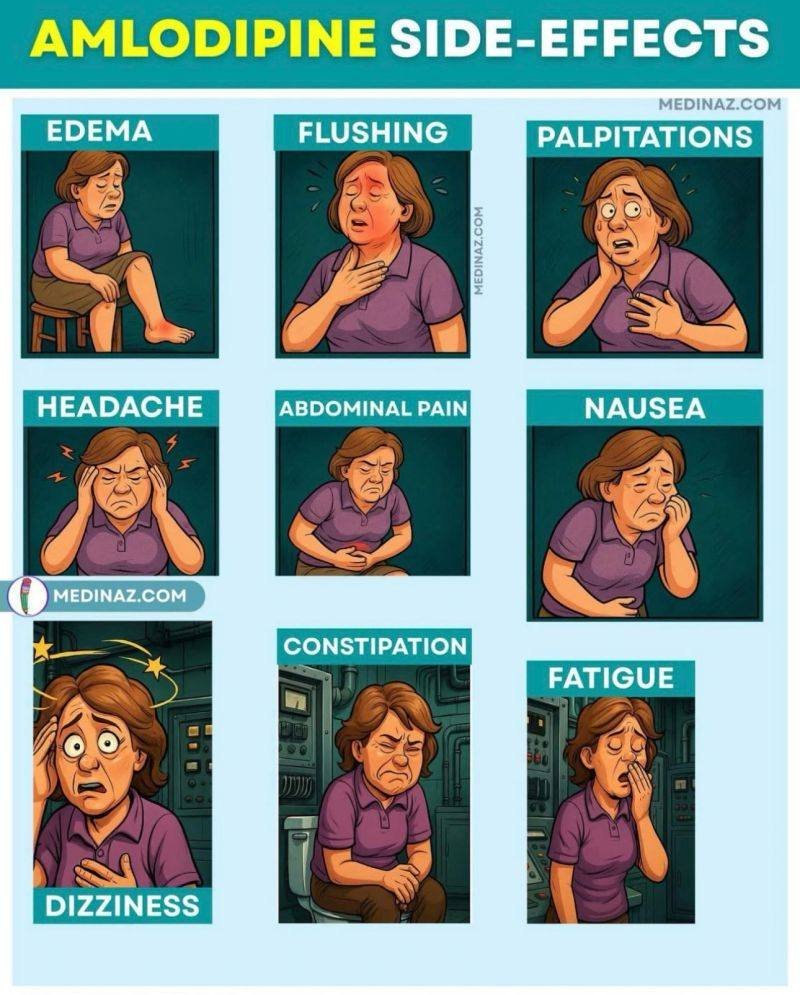
💊 Common side effects of Amlodipine
Amlodipine is a calcium channel blocker used for high blood pressure and chest pain. Many people tolerate it well, but some experience side effects—especially when starting treatment or increasing the dose.
⚠️ Most common side effects
🦶 1. Swelling (edema)
- Especially in ankles, feet, or lower legs
- Caused by widened blood vessels leading to fluid leakage into tissues
🧠 2. Headache
- Often mild to moderate
- More common when starting treatment
🔥 3. Flushing
- Warmth or redness in face, neck, or chest
- Temporary and usually harmless
😴 4. Fatigue
- Feeling tired or low energy
- Related to blood pressure lowering effect
🥴 5. Dizziness
- Especially when standing up quickly
- Due to lowered blood pressure
💓 6. Palpitations
- Awareness of heartbeat or mild fast heartbeat
- Usually temporary
🧬 Less common side effects
- Nausea or stomach discomfort
- Sleepiness
- Muscle cramps
- Mild gum swelling (rare, long-term use)
🚨 When to seek medical attention
Contact a healthcare provider if you notice:
- Severe or worsening leg swelling
- Chest pain or shortness of breath
- Fainting or very low blood pressure
- Allergic reactions (rash, swelling of face/lips, breathing difficulty)
🧠 Key takeaway
Most side effects are mild and manageable, and many improve as your body adjusts. The most characteristic one is ankle swelling.
If you want, I can also explain:
- how to reduce amlodipine swelling
- whether it interacts with other medicines or foods
- or how it compares with other blood pressure drugs
