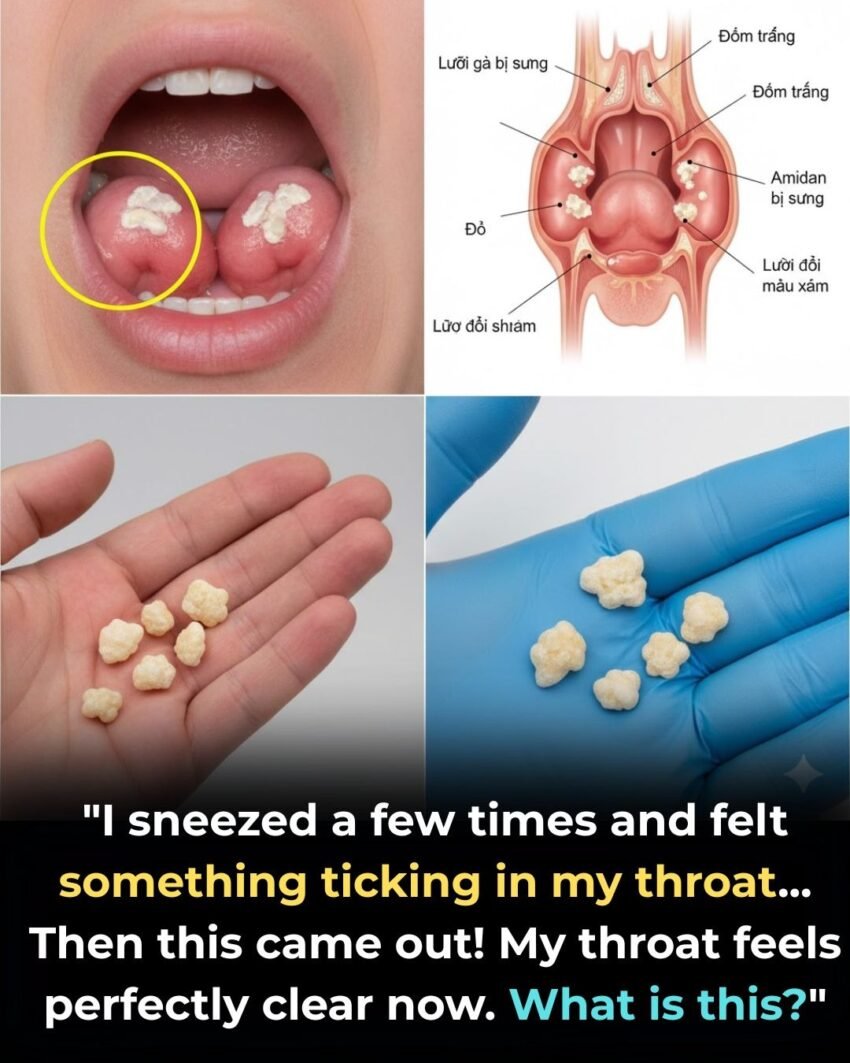
Tonsil stones (also called tonsilloliths) are small, hard lumps that form in the crevices of your tonsils. They’re made of trapped debris like food particles, dead cells, mucus, and bacteria that calcify over time.
Common symptoms
- Bad breath (often the most noticeable sign)
- Feeling like something is stuck in the throat
- Sore throat or mild irritation
- White or yellowish spots on tonsils
- Coughing up small, foul-smelling “stones”
Why they happen
They form more easily if you have:
- Deep tonsil crypts (natural pockets in tonsils)
- Chronic throat infections
- Poor oral hygiene
- Post-nasal drip or sinus issues
How to remove them (safe options)
- Gargle salt water (warm water + salt) to loosen them
- Coughing gently can sometimes dislodge them
- Cotton swab (very carefully) to push them out if visible
- Oral irrigator (water flosser) on low pressure
- Good brushing + tongue cleaning + flossing
⚠️ Avoid digging too aggressively with sharp objects—it can cause bleeding or infection.
Prevention
- Brush teeth twice daily + clean tongue
- Gargle salt water or mouthwash regularly
- Stay hydrated
- Treat sinus/post-nasal drip if present
When to see a doctor
- Frequent or large tonsil stones
- Severe pain, swelling, or fever
- Persistent bad breath despite good hygiene
In stubborn cases, an ENT specialist may suggest treatments like laser tonsil cryptolysis or rarely tonsil removal (tonsillectomy).
If you want, I can tell you how to check if you have them at home or the safest way to remove them step-by-step.
