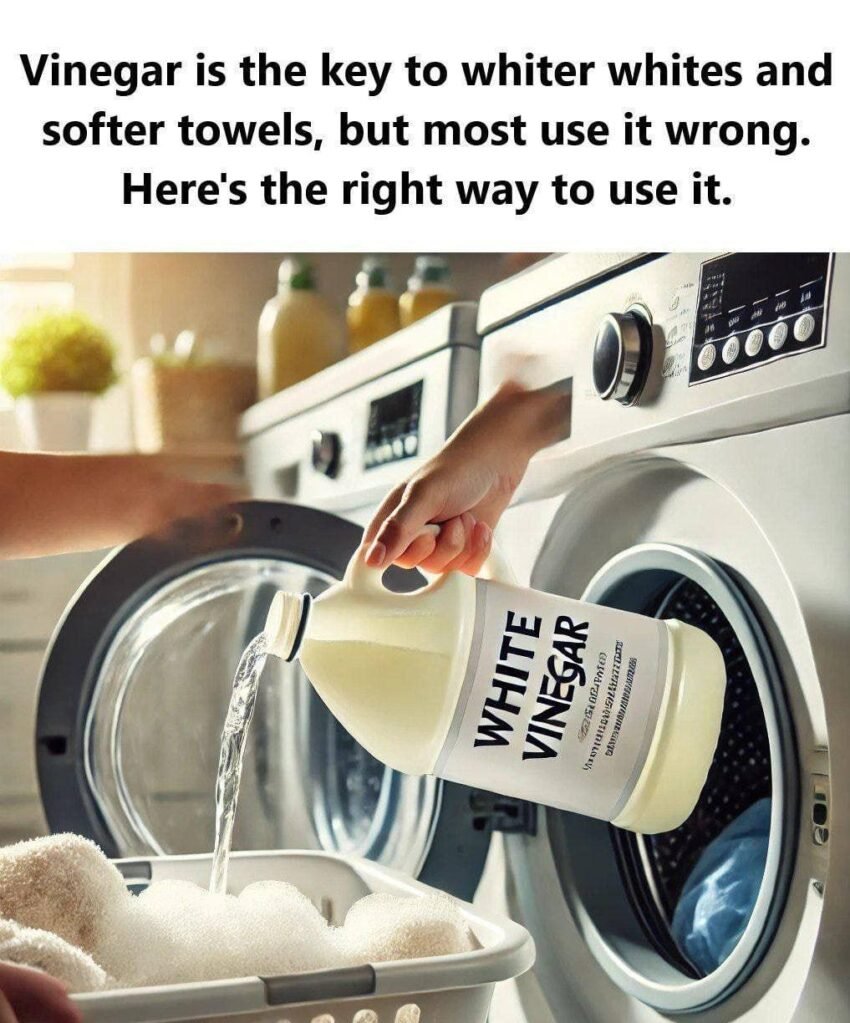
Yes—White vinegar (usually diluted acetic acid) is a common household cleaning aid, and it can help with laundry in several practical ways. However, it doesn’t “bleach” clothes in the same way chlorine bleach does—it works more through odor removal, residue breakdown, and mild brightening effects.
👕 1. Whitening and brightening clothes
White vinegar can:
- Help remove detergent buildup that makes fabrics look dull
- Reduce soap residue that traps dirt and odors
- Slightly brighten whites over time
👉 It is best for maintenance “freshening,” not heavy bleaching or stain removal.
🧺 2. Softening towels
Vinegar can act as a natural fabric softener:
- Breaks down mineral deposits from hard water
- Removes detergent coating that makes towels stiff
- Leaves towels feeling softer and more absorbent
👃 3. Removing odors from fabrics
It is effective at neutralizing smells like:
- Sweat
- Mustiness (stored clothes)
- Smoke or cooking odors
It works by altering odor-causing compounds so they are less noticeable.
🧼 How to use it safely
- Add ½ to 1 cup of white vinegar during the rinse cycle
- Or use in a separate rinse cycle instead of fabric softener
- Do not mix directly with bleach (can create harmful fumes)
⚠️ Limitations
- Does not remove strong stains like oil or dye
- Not a disinfectant at normal laundry dilutions
- Overuse may affect elastic fibers or rubber parts in some machines if used excessively
🧠 Simple takeaway
White vinegar is a mild, natural laundry helper—good for softening fabrics, reducing odors, and preventing dullness, but not a true whitening bleach substitute.
If you want, I can compare it with baking soda, commercial softeners, or explain a full eco-friendly laundry routine.
