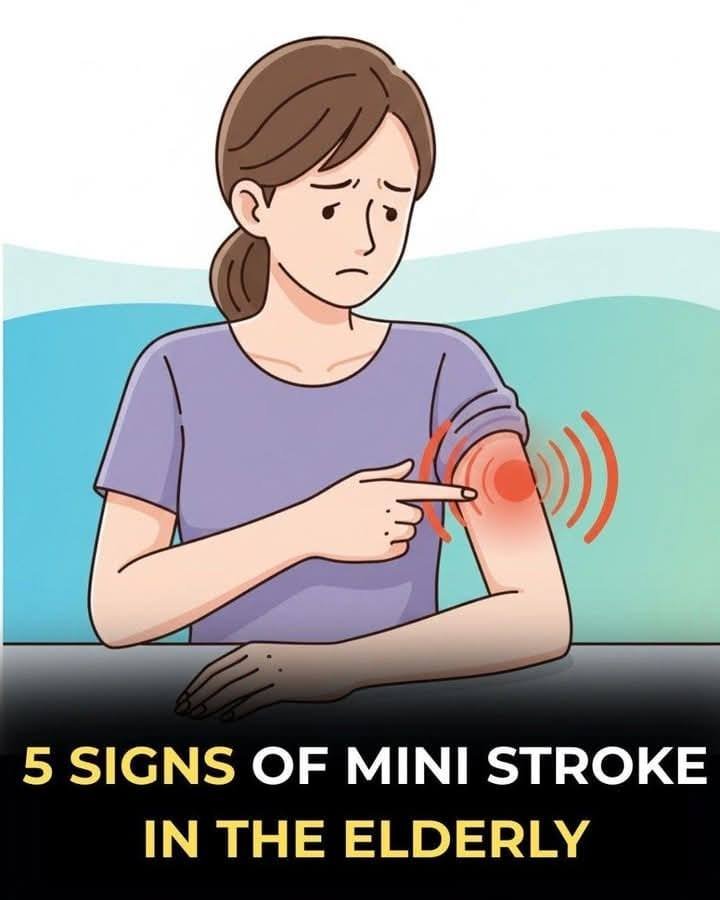
A mini-stroke, medically called a TIA (Transient Ischemic Attack), happens when blood flow to the brain is briefly blocked. Symptoms usually last minutes to hours and then disappear—but it is a serious warning sign of a possible full stroke.
Here are 5 key signs of a mini-stroke in the elderly:
🧠 1. Sudden weakness or numbness (especially on one side)
- Face, arm, or leg may feel weak or numb
- Often affects only one side of the body
- Person may drop objects or have trouble lifting an arm
🗣️ 2. Trouble speaking or understanding
- Slurred speech
- Difficulty finding words
- Confused responses or inability to understand others
😵 3. Sudden dizziness or loss of balance
- Trouble walking straight
- Feeling unsteady or falling
- Loss of coordination
👁️ 4. Sudden vision problems
- Blurred vision
- Loss of vision in one or both eyes
- Seeing double
🧠 5. Sudden confusion or mental changes
- Disorientation
- Difficulty thinking clearly
- Unusual behavior or memory issues
🚨 Important warning
Even if symptoms disappear quickly, a TIA is a medical emergency warning.
👉 It may be followed by a major stroke within hours or days if untreated.
⏱️ What to do immediately (FAST check)
- Face drooping
- Arm weakness
- Speech difficulty
- Time to call emergency services
🧠 Bottom line
A mini-stroke is not “minor”—it is a critical warning sign that requires urgent medical attention to prevent a major stroke.
