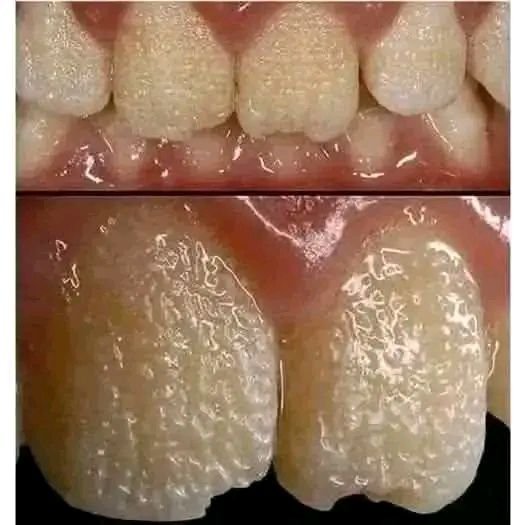
Amelogenesis imperfecta is a rare genetic condition that affects the development of tooth enamel, the hard outer layer of teeth.
🦷 What it is
- A hereditary disorder (passed through genes)
- Causes abnormal enamel formation
- Affects both baby teeth and permanent teeth
🧬 What goes wrong
Normally, enamel forms strong and smooth. In this condition:
- Enamel may be thin, soft, or poorly formed
- Teeth may not fully protect against damage
😬 Common signs
👀 Appearance
- Teeth may look yellow, brown, or mottled
- Enamel can appear rough, pitted, or uneven
- Teeth may look smaller or misshaped
🦷 Sensitivity
- Increased sensitivity to hot, cold, or sweet foods
- Pain while eating or drinking
🧨 Weak teeth
- Higher risk of chipping, wear, or decay
- Teeth may break more easily
🧠 Causes
- Genetic mutations affecting enamel-forming proteins
- Can be inherited from one or both parents
- Not caused by poor hygiene
🩺 Treatment options
There is no cure, but it can be managed:
- 🦷 Dental bonding or veneers (improve appearance)
- 👑 Crowns to protect weak teeth
- 🪥 Fluoride treatments to strengthen enamel
- 😌 Pain management for sensitivity
- Regular dental care and monitoring
🟡 Simple summary
Amelogenesis imperfecta is a genetic condition where tooth enamel doesn’t form properly, leading to discolored, sensitive, and weaker teeth, but it can be managed with dental treatment.
