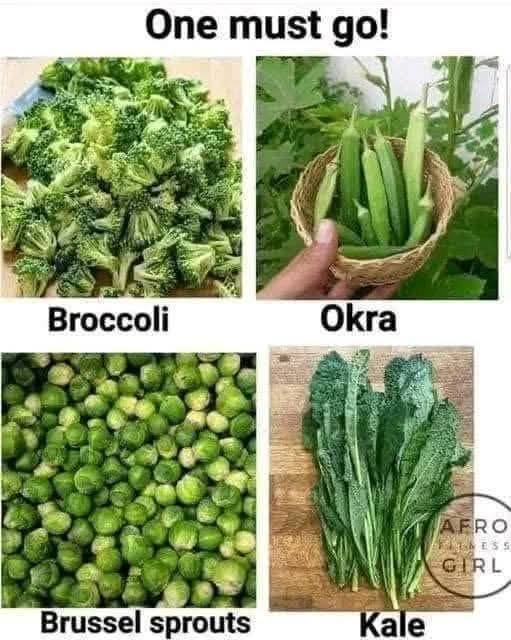
Here’s a quick, clear guide to those vegetables—what they are, taste, and why people eat them:
🥦 Broccoli
Broccoli
A green cruciferous vegetable with small tree-like florets.
- Taste: Mild, slightly earthy
- Texture: Crisp when raw, soft when cooked
- Nutrition: High in fiber, vitamin C, vitamin K
- Common use: Stir-fries, steaming, salads, soups
🌿 Okra (Lady’s finger)
Okra
A green pod vegetable popular in South Asian, Middle Eastern, and Southern cooking.
- Taste: Mild, slightly grassy
- Texture: Can be slimy when cooked (due to mucilage)
- Nutrition: Fiber-rich, supports digestion
- Common use: Curries, frying, stews (bhindi masala)
🥬 Brussels sprouts
Brussels sprouts
Small cabbage-like buds that grow on a stalk.
- Taste: Slightly bitter, nutty when roasted
- Texture: Firm outside, soft inside
- Nutrition: High in fiber, antioxidants, vitamin C
- Common use: Roasted, grilled, sautéed
🥬 Kale
Kale
A leafy green vegetable from the cabbage family.
- Taste: Earthy, slightly bitter (less bitter when cooked)
- Texture: Tough raw, tender when cooked
- Nutrition: Very high in vitamins A, C, K and antioxidants
- Common use: Salads, smoothies, sautéed dishes, chips
🧠 Quick comparison
| Vegetable | Taste | Texture | Key benefit |
|---|---|---|---|
| Broccoli | Mild | Crisp | Vitamin C + fiber |
| Okra | Mild | Soft/slimy | Digestion support |
| Brussels sprouts | Bitter-nutty | Firm | Antioxidants |
| Kale | Earthy | Leafy/tough | Nutrient-dense |
🍽️ Simple takeaway
All four are nutrient-dense vegetables, especially rich in fiber, vitamins, and antioxidants. They mainly differ in taste and texture, from mild (broccoli, okra) to stronger (kale, Brussels sprouts).
If you want, I can rank them by health benefits, or suggest tasty recipes to make them actually enjoyable (especially kale and Brussels sprouts, which people often struggle with).
