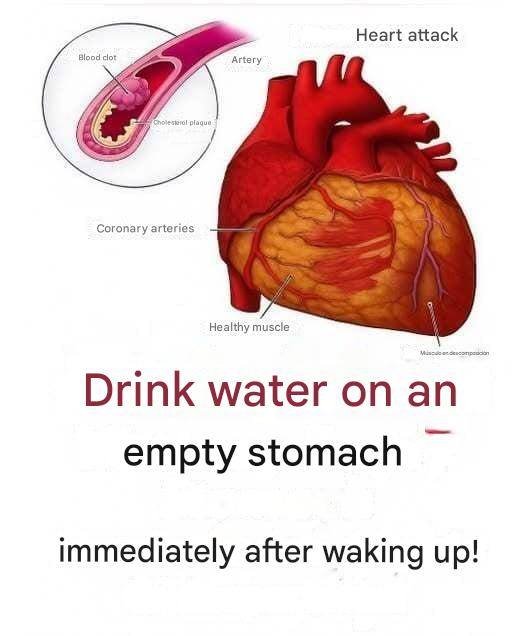
Drinking water on an empty stomach (usually first thing after waking up) is generally considered healthy and safe for most people. It’s a common habit in many cultures, but its effects are often slightly exaggerated online.
What it can actually do
- Rehydrates your body: After 6–8 hours of sleep, your body is mildly dehydrated. Water helps restore fluid balance.
- May support digestion: It can gently “wake up” your digestive system and help bowel movements.
- May improve alertness: Even mild dehydration can affect focus and energy; water can help you feel more awake.
- Helps metabolism slightly: Drinking water can temporarily increase metabolic rate a little, but it’s not a weight-loss shortcut on its own.
- May support detox functions: Your kidneys and liver already handle detoxification, and proper hydration helps them work efficiently.
What it does NOT do (common myths)
- It does not “flush toxins” in a special or dramatic way.
- It does not cure diseases or directly burn fat.
- It is not a miracle solution for skin or immunity (though hydration can support overall health).
How to do it properly
- 1–2 glasses (250–500 ml) of plain water in the morning is enough.
- Lukewarm water is fine if you prefer it; it doesn’t need to be hot or lemon-infused.
- Avoid drinking excessive amounts at once—too much water quickly can cause discomfort.
When to be careful
- If you have kidney, heart, or electrolyte disorders, fluid intake should follow medical advice.
- If you feel bloated or nauseous, reduce the amount or sip slowly instead of drinking quickly.
If you want, I can also explain whether adding lemon, honey, or salt to morning water actually helps or not.
