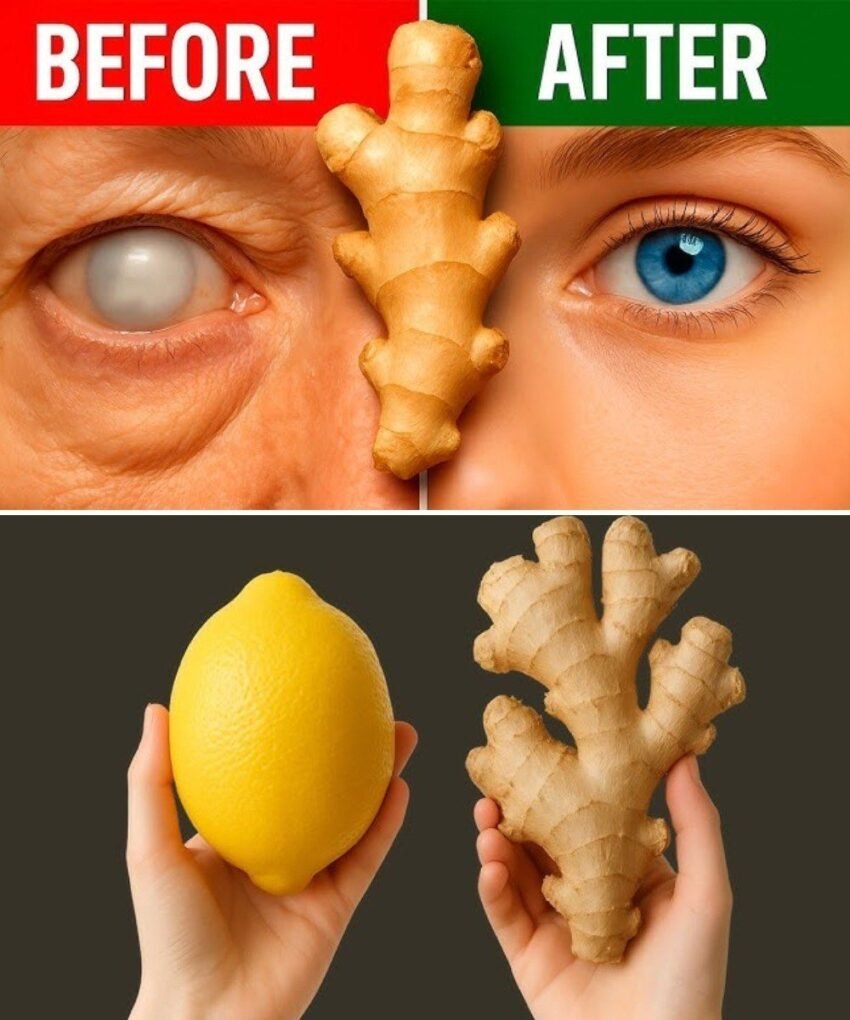
Ginger and lemon are often promoted online as “natural cures” for many health problems, but for serious eye conditions, they are not effective treatments and can be risky if misused.
👁️ What they actually can (and can’t) do
🫚 Ginger
- Has anti-inflammatory and antioxidant properties when eaten
- May support general health (circulation, immune system)
- ❌ No evidence it treats eye diseases like cataracts, glaucoma, infections, or retinal problems
- ❌ Not safe to apply directly in or near the eye
🍋 Lemon
- Rich in vitamin C (good for overall nutrition)
- ❌ Does not treat eye diseases when eaten or applied
- ❌ Extremely acidic—can irritate or damage eye tissue if it comes into contact with the eye
- ❌ Should never be used as eye drops or washes
⚠️ Important medical reality
Serious eye conditions such as:
- Glaucoma (pressure damaging the optic nerve)
- Cataract (clouding of the eye lens)
- Retinal diseases
- Eye infections
…require proper medical diagnosis and treatment, often including:
- Prescription eye drops
- Laser therapy or surgery
- Antibiotics or antivirals (for infections)
Delaying treatment with home remedies can lead to permanent vision loss.
🧠 Safer approach
If someone has eye symptoms like:
- Blurred vision
- Pain or redness
- Sudden vision changes
- Light sensitivity
They should see an eye specialist (ophthalmologist) as soon as possible.
✔️ Where ginger & lemon do fit in
They can be part of a healthy diet that supports overall wellbeing, but they are supportive foods, not eye treatments.
