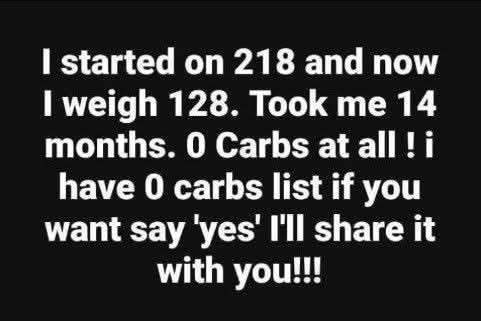
Losing 90 pounds in 14 months is a big change, and a “0 carb” approach sounds impressive—but it’s also a bit misleading in how it’s usually described.
🧠 First reality check: “0 carbs” is almost never truly zero
Even strict low-carb or ketogenic diets still include small carbs from:
- Eggs, dairy
- Vegetables (broccoli, spinach, etc.)
- Nuts and seeds
So most people saying “0 carb” are actually doing very low-carb (often ketogenic), not absolute zero.
⚖️ Why low-carb diets can cause weight loss
A very low-carb diet can work because:
1. Lower insulin levels
Less carbohydrate intake → lower insulin → easier access to stored fat.
2. Reduced appetite
High-protein and high-fat meals tend to:
- Increase fullness
- Reduce snacking
3. Water weight loss (early phase)
Carbs store water in the body. When carbs drop:
- Glycogen decreases
- Water weight drops quickly (often first 5–15 lbs)
4. Calorie reduction (often unnoticed)
People often end up eating fewer total calories without trying.
⚠️ Important limitations of “0 carb” claims
1. Not necessary for fat loss
You lose weight when:
- Calories in < calories out
Not strictly by removing carbs.
2. Hard to sustain long-term
Many people struggle with:
- Social eating
- Food variety
- Energy during exercise
3. Possible side effects
Some may experience:
- Fatigue (“keto flu” early on)
- Constipation (low fiber)
- Nutrient gaps if poorly planned
🥩 What successful long-term weight loss usually looks like
Most sustainable approaches include:
- Moderate carbs (not zero)
- High protein
- Whole foods (less ultra-processed food)
- Consistent calorie control
- Regular activity
🧾 Simple takeaway
A “0 carb” diet can lead to significant weight loss, mainly because it reduces appetite and total calorie intake—not because carbs are inherently bad or fattening.
