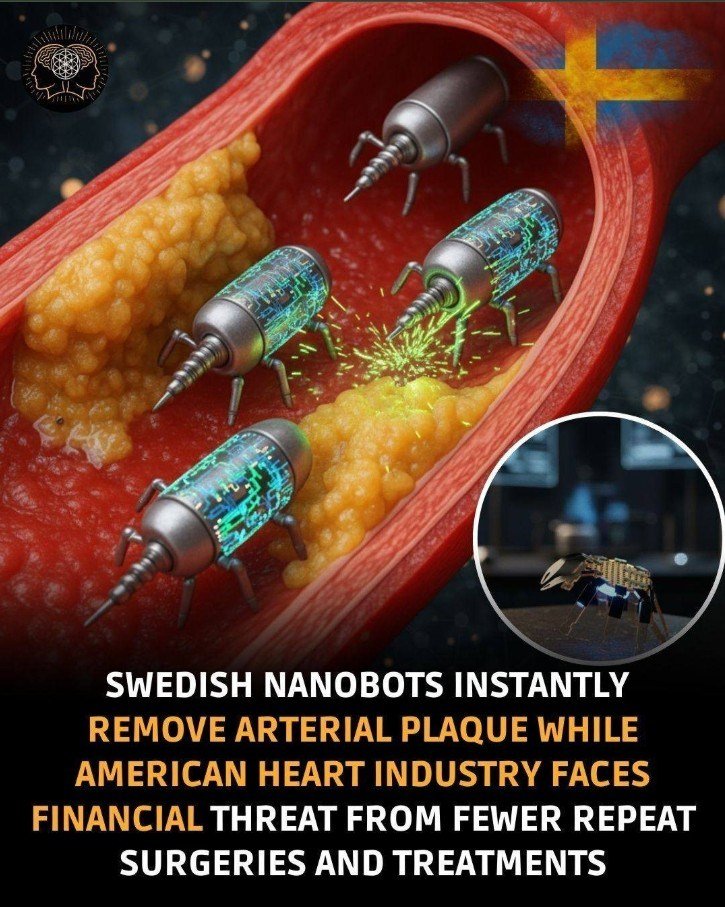
Nanomedicines and nanorobots for targeted drug delivery in atherosclerosis are part of a rapidly developing area in cardiovascular nanotechnology aimed at treating plaque buildup in arteries more precisely and with fewer side effects than conventional drugs.
1. Why atherosclerosis needs targeted delivery
Atherosclerosis is caused by the buildup of fatty plaques (lipids, inflammatory cells, calcium) inside arterial walls. These plaques:
- Narrow blood vessels → reduced blood flow
- Can rupture → trigger heart attacks or strokes
- Are deeply embedded in vessel walls, making them hard to treat directly
Traditional drugs (statins, anti-inflammatories, antiplatelets) circulate systemically, so:
- Only a small fraction reaches plaques
- Higher doses increase side effects (liver, muscle, bleeding risks)
This is where nanotechnology becomes useful.
2. Nanomedicines: what they are and how they work
Nanomedicine refers to drug systems engineered at the nanometer scale (1–100 nm). In atherosclerosis, they act as “smart carriers” for drugs.
Main types used:
- Lipid nanoparticles (liposome-like carriers)
- Polymeric nanoparticles (PLGA, PEG-based)
- Gold or iron oxide nanoparticles
- Biomimetic nanoparticles (coated with cell membranes like macrophages or platelets)
How they target plaques:
Nanoparticles are engineered with “homing” abilities:
Passive targeting
- Plaques have leaky, inflamed blood vessels
- Nanoparticles accumulate there naturally (enhanced permeability)
Active targeting
Surface is modified with ligands that bind plaque markers:
- VCAM-1 / ICAM-1 (inflammation markers)
- Scavenger receptors on macrophages
- Fibrin or collagen in ruptured plaques
What they deliver:
- Statins (anti-cholesterol drugs)
- siRNA / gene therapy (reduce inflammation genes)
- Anti-inflammatory drugs (e.g., IL-1 inhibitors)
- Cholesterol efflux promoters (help remove lipid buildup)
3. Nanorobots: next-generation precision tools
Nanorobotics goes beyond passive nanoparticles. These are engineered micro/nanoscale devices that can be guided or programmed.
Potential functions in atherosclerosis:
1. Targeted navigation
- Magnetic guidance (external magnetic fields)
- Chemical sensing (detect inflammation signals)
- Ultrasound or light activation (in experimental systems)
2. Plaque interaction
Nanorobots can be designed to:
- Penetrate plaque layers
- Deliver drugs directly inside lipid cores
- Break down fibrin or cholesterol deposits
3. Mechanical intervention (experimental)
- Disrupt or soften plaques
- Assist in micro-scale “cleaning” of arterial walls
4. Combined therapeutic strategies
Modern research often combines both approaches:
| System | Function |
|---|---|
| Nanoparticles | Drug delivery + imaging |
| Nanorobots | Navigation + mechanical action |
| Hybrid systems | Diagnosis + therapy (“theranostics”) |
Example: iron-oxide nanoparticles that both target macrophages in plaques and allow MRI imaging of inflammation.
5. Key advantages
- High drug concentration at plaque site
- Reduced systemic toxicity
- Potential to treat early-stage plaques before rupture
- Dual use: imaging + therapy
- Possibility of personalized treatment
6. Challenges and limitations
Despite promise, several barriers remain:
Biological challenges
- Immune system clearance (macrophage uptake in liver/spleen)
- Crossing endothelial barriers safely
- Heterogeneous plaque composition
Engineering challenges
- Precise control of nanorobots in blood flow
- Stability in circulation
- Scalable manufacturing
Safety concerns
- Long-term toxicity of materials (gold, polymers, metals)
- Risk of vessel blockage if particles aggregate
- Ethical and regulatory uncertainty for nanorobots
7. Current research direction
Researchers are focusing on:
- “Smart” nanoparticles that release drugs only in inflamed environments (pH/enzymatic triggers)
- Biomimetic coatings (platelet or RBC membranes) to evade immune detection
- Magnetically guided micro-robots for arterial navigation
- AI-guided targeting systems for personalized vascular therapy
8. Big picture
Nanomedicines are already moving toward clinical use in cardiovascular disease, while nanorobots remain largely experimental. The long-term vision is:
A system that can detect atherosclerotic plaques early, navigate directly to them, deliver therapy locally, and monitor healing in real time.
If you want, I can also break down:
- how nanoparticles are actually manufactured step-by-step
- or what current human trials exist for cardiovascular nanomedicine
- or a diagram-style explanation of plaque targeting mechanisms
