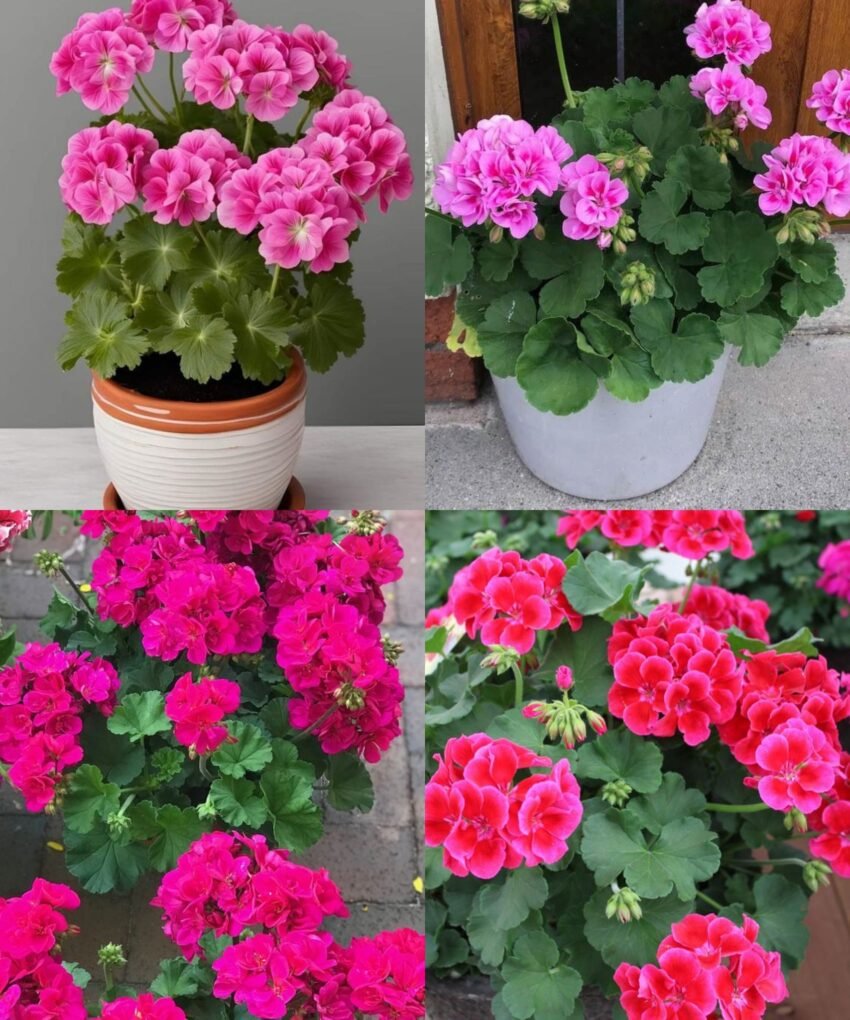
Pelargonium zonale is a flowering plant species in the geranium family (Geraniaceae), commonly known as the zonal geranium. It is one of the most popular ornamental plants grown worldwide for gardens, balconies, and indoor pots.
What it looks like
- Rounded, soft green leaves often with a darker “zone” or ring pattern (this is where the name “zonale” comes from)
- Bright clusters of flowers in colors like red, pink, white, or salmon
- Grows as a bushy, upright plant in pots or garden beds
Where it grows best
- Prefers full sun to partial shade
- Thrives in moderate, well-drained soil
- Tolerates warm climates well, but can struggle in heavy frost
- Very popular in Mediterranean-type and South Asian gardens
Care basics
- Watering: Moderate; let soil dry slightly between watering (overwatering causes root rot)
- Soil: Well-draining potting mix
- Fertilizer: Light feeding every few weeks during flowering season
- Pruning: Removing dead flowers encourages more blooms
Uses
- Decorative gardening (balconies, borders, pots)
- Indoor ornamental plant in bright light
- Sometimes used in traditional herbal preparations in limited contexts (though not a primary medicinal plant)
Interesting fact
Despite the common name “geranium,” Pelargonium zonale is not a true geranium—it was historically classified differently, and gardeners still use the old naming convention.
