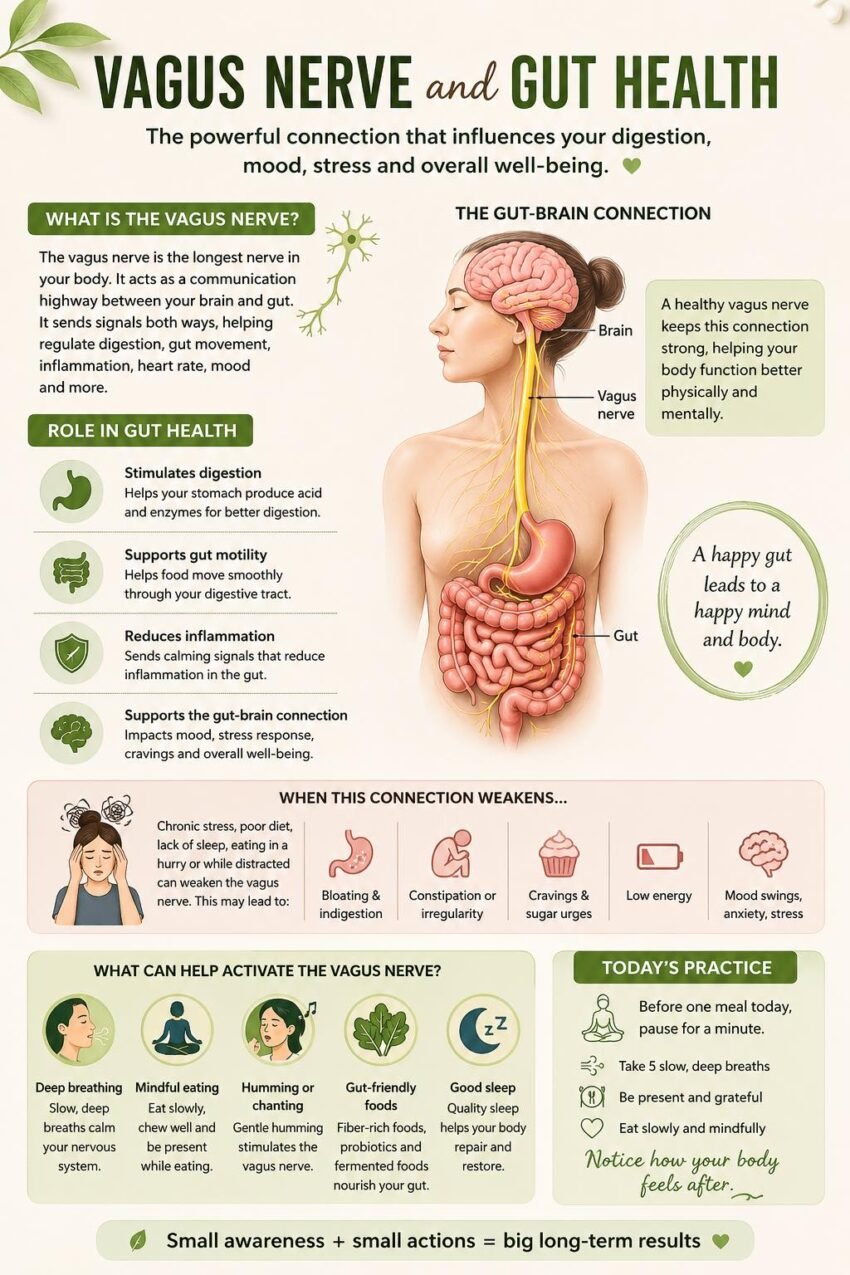
🧠➡️🍽️ The Vagus Nerve & Digestive Health
The vagus nerve is a major nerve that connects your brain to many organs—including the stomach and intestines. It plays a central role in the gut-brain axis, meaning your brain and digestive system are constantly “talking” to each other.
🧬 What the vagus nerve does for digestion
1. Starts digestion (before you even eat)
When you see or smell food, the vagus nerve signals your stomach to:
- Release digestive juices
- Prepare enzymes and acid
2. Controls gut movement
It helps regulate peristalsis—the rhythmic contractions that move food through your digestive tract.
3. Stimulates stomach acid & enzymes
The nerve tells your stomach to produce acid and your pancreas to release enzymes, helping break down food properly.
4. Supports nutrient absorption
By coordinating digestion, it indirectly helps your body absorb nutrients efficiently.
5. Reduces inflammation
The vagus nerve has an anti-inflammatory role via the cholinergic anti-inflammatory pathway, helping keep the gut environment balanced.
⚠️ When vagus nerve function is low
Poor vagal tone (weaker signaling) can lead to:
- Bloating and indigestion
- Slow stomach emptying
- Acid reflux
- Constipation or irregular bowel movements
- Conditions like Irritable Bowel Syndrome (IBS)
🧘 Ways to support vagus nerve health
🌿 Lifestyle practices:
- Deep, slow breathing (stimulates vagus nerve)
- Meditation and relaxation
- Regular physical activity
🥗 Eating habits:
- Eat slowly and mindfully
- Chew food thoroughly
- Avoid overeating
❄️ Other methods:
- Cold exposure (like splashing cold water on face)
- Humming or singing (activates vocal cord pathways linked to the nerve)
🌟 Bottom line
The vagus nerve is a key link between your brain and gut. When it functions well, digestion is smoother, inflammation is lower, and overall gut health improves.
If you want, I can also explain:
- Signs of strong vs weak vagal tone
- Exercises to improve gut-brain connection
- Or how stress directly impacts digestion 🧠🍽️
