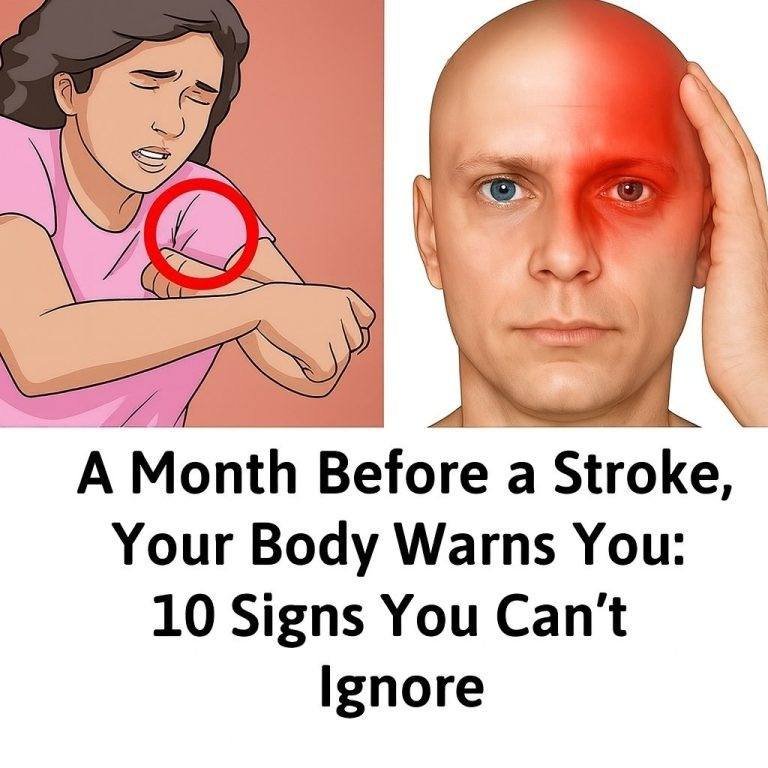
A stroke often happens suddenly, but in some people there are warning signs days to weeks before. These early signals are usually related to a mini-stroke (TIA) or reduced blood flow to the brain.
A key condition to know here is a transient ischemic attack (TIA)—often called a “mini-stroke.” It produces stroke-like symptoms that go away, but it is a serious warning that a full stroke may follow.
🚨 Possible warning signs weeks before a stroke
1. Transient weakness or numbness
- Brief weakness in the face, arm, or leg
- Often on one side of the body
- May come and go within minutes or hours
2. Temporary speech problems
- Slurred speech
- Difficulty finding words
- Trouble understanding conversation
3. Short episodes of vision changes
- Blurred vision
- Loss of vision in one eye (like a curtain coming down)
- Double vision
4. Sudden dizziness or balance issues
- Feeling unsteady or “off balance”
- Difficulty walking straight
- Brief episodes of vertigo
5. Unusual, brief confusion
- Trouble concentrating
- Momentary memory lapses
- Feeling mentally “foggy”
6. Mild or unusual headaches (less common)
- Sudden headaches that are different from usual
- Especially concerning if paired with neurological symptoms
⏱️ Important pattern to understand
- These symptoms may last minutes to a few hours
- Then fully disappear
- That “recovery” is what makes people ignore them—but it’s actually a warning sign
🧠 Why this matters
A TIA is not harmless:
- About 1 in 5 people who have a TIA may have a full stroke soon after
- Risk is highest in the first 48 hours to a few weeks
🚑 What to do if these signs appear
Even if symptoms go away:
- Seek urgent medical evaluation immediately
- Do not wait for it to happen again
- Doctors may check blood pressure, brain imaging, and start preventive treatment
💡 Risk factors that make warning signs more important
- High blood pressure
- Diabetes
- Smoking
- High cholesterol
- Heart disease or irregular heartbeat (atrial fibrillation)
🧠 Bottom line
Weeks before a stroke, the body may send brief, warning “mini-stroke” episodes. Even if symptoms disappear, they should always be treated as a medical emergency warning, not ignored.
